The Wandering Verses of Subcontinental Sufi Poets
Reference library · 1029 words
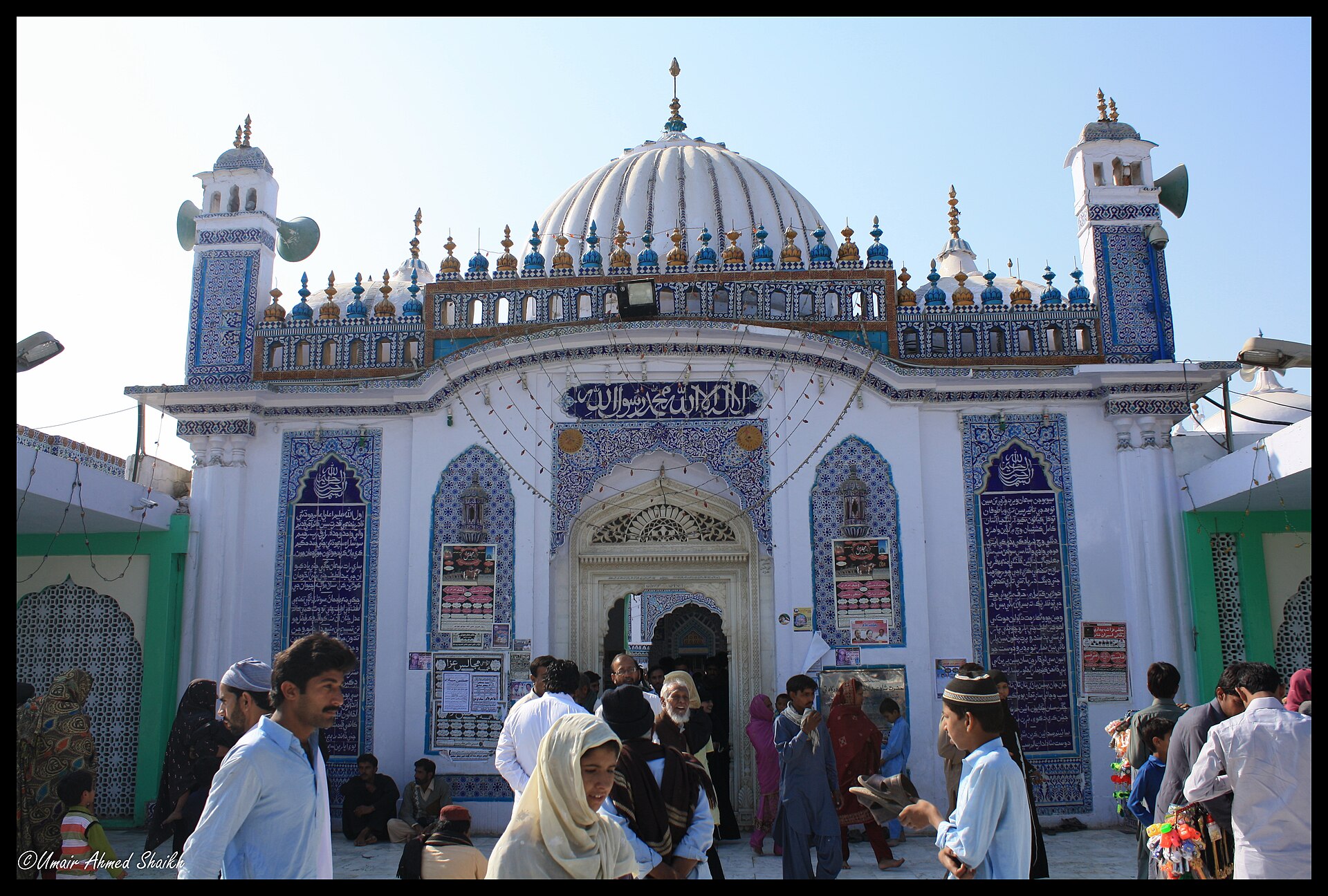

Across Punjab, Sindh, the Deccan and the Gangetic plain, a body of religious poetry developed from roughly the thirteenth century onward that was written not in Persian or Arabic but in local speech, and that was designed to be sung rather than read. This is the Sufi verse tradition of the subcontinent, and it has an unusual social history. Much of it was composed by men attached to Sufi lineages, chiefly the Chishti and Qadiri orders, yet it circulated far outside those orders, entered Sikh scripture, is sung today by Muslim and Hindu performers alike, and turns up in Hindi film soundtracks. Its transmission was mostly oral, which is both why it survived and why its texts are unstable.
Punjabi and the vernacular turn
The tradition's earliest major figure in Punjabi is Fariduddin Ganjshakar, known as Baba Farid, who lived from around 1188 to 1266. A founding figure of the Chishti order in the subcontinent, he was a disciple of Qutbuddin Bakhtiar Kaki and the teacher of Nizamuddin Auliya of Delhi. Farid settled at Ajodhan, now Pakpattan in Pakistani Punjab, where his shrine remains a major pilgrimage site. His significance for literature is that he composed in the local dialect rather than Persian, which is why he is often called the first major Punjabi poet.
The most striking evidence of how far this poetry travelled is that Farid's verses were incorporated into Sikh scripture. Guru Arjan included them in the Adi Granth, and something over a hundred hymns attributed to Farid stand in the Guru Granth Sahib, where he is honoured among the bhagats alongside the Sikh Gurus. A thirteenth century Chishti shaikh is therefore a canonical voice in a scripture compiled three centuries later by a different religion. Scholars debate whether all the verses attributed to him are his or whether some belong to later successors who inherited his name and seat, and there is no settled answer.
The Punjabi tradition's most quoted voice is Bulleh Shah, who lived from about 1680 to 1757, was born at Uch and spent most of his life at Kasur. His teacher was Shah Inayat Qadiri of Lahore, and much of Bulleh Shah's biography turns on the scandal of a Sayyid taking a spiritual master from a lower status Arain background. His preferred form was the kafi, a short stanzaic lyric with a refrain, built for musical setting. The content is relentlessly anti clerical: he mocks scholars who have read many books but not themselves, ritual performed without love, and the pride of birth. Around 150 kafis are commonly attributed to him. His verses remain so current in Punjab on both sides of the border that lines of his are used in argument the way proverbs are.
Sindh and the musical architecture of a book
In Sindhi the towering figure is Shah Abdul Latif Bhittai, born around 1689 or 1690 and died in 1752 at Bhit Shah, where his shrine stands. His poetry survives as the Shah Jo Risalo, compiled by disciples after his death and first printed in 1866. What makes the Risalo unusual is its organisation. It is divided into chapters called sur, each named for a musical mode, so the book is arranged by raga rather than by theme or chronology. The poetry is not set to music after the fact; the musical setting is part of the structure.
Latif's method was to take Sindhi and Punjabi folk romances and read them as allegories of the soul's search for God. Sassui walking into the desert after Punnhun, Sohni swimming the Indus on a baked clay pot to reach Mahiwal, Marui refusing the comforts of a king's palace because she longs for her poor home in Malir: in each case the woman is the seeker and her longing is the model of devotion. Other surs turn to praise of the Prophet or to lament for Husayn at Karbala. Every Thursday evening at Bhit Shah his poetry is sung by hereditary musicians and dervishes in a performance known as Shah jo Rag, an unbroken practice that is itself part of the text's transmission.
Attribution, corruption and a warning
Two cautions apply to almost everything written about this tradition in popular sources. The first concerns textual reliability. Because this poetry travelled orally through singers who added, adapted and improvised, the manuscripts are heavily contaminated. The case of Waris Shah, the Chishti poet who lived from 1722 to 1798 and whose Heer Ranjha of the later eighteenth century is the great Punjabi verse romance, is instructive: scholars have identified many thousands of interpolated verses in circulating copies. Waris Shah was not writing Sufi lyric in the manner of Bulleh Shah, but his poem is saturated with the same vocabulary of longing, and the boundary between romance and mystical verse in Punjabi is genuinely blurred.
The second caution concerns invention stories. Amir Khusrau, who lived from 1253 to 1325 and was a disciple of Nizamuddin Auliya, is by far the most celebrated Persian and Hindavi poet of the tradition, and he is routinely credited with inventing the sitar, the tabla and qawwali itself. These attributions do not survive scrutiny. For the sitar, historians regard the Khusrau tradition as discredited, no source of his period uses the name, and the instrument is now traced to an eighteenth century Mughal court musician also called Khusrau Khan, with a nineteenth century reference apparently confusing the two men. For the tabla, no painting, sculpture or document of his period supports the claim, and it appears in no contemporary list of instruments; the popular story that a pakhawaj was cut in half to make it is rejected by scholars. Even the six musical styles commonly ascribed to him lack sufficient evidence.
None of this diminishes Khusrau, whose Persian verse and Hindavi lyrics are genuinely his. It does mean that the tidy account of a single genius inventing the classical apparatus of north Indian music should be treated as a later legend rather than as history. The actual pattern in this tradition is the opposite of individual invention: forms accrete, texts drift, and authorship is a claim made by communities of singers about poets they revere.
References
- WikipediaFariduddin Ganjshakar
- WikipediaBulleh Shah
- WikipediaShah Abdul Latif Bhittai
- WikipediaSitar
- WikipediaTabla
This is a reference article, written from the sources above. It is background, not news reporting.