The Slow Art of Awadhi Kebabs
Reference library · 978 words

The distinguishing quality of an Awadhi kebab is not spice and it is not smoke. It is texture. A properly made galouti collapses under the tongue with almost no resistance, a kakori slides off its skewer if you are careless carrying it, and a shami holds together only just. Everything technical in this tradition is aimed at softness, and the pursuit of softness produced a set of methods that are genuinely unusual in Indian cooking.
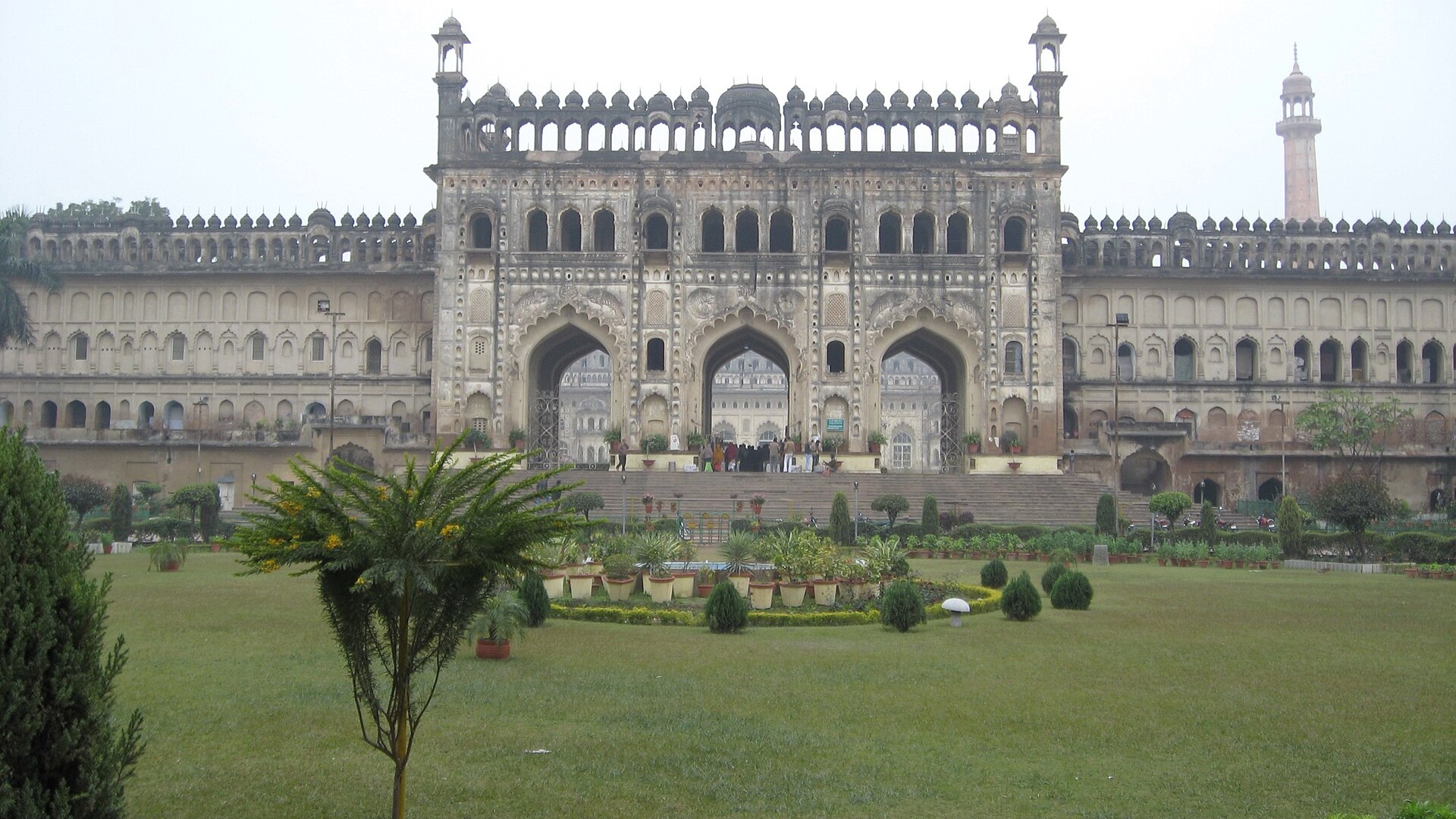
Awadh is the region of the central Gangetic plain around Lucknow and Faizabad, governed from 1722 by a line of Nawabs of Persian descent who established a court culture that was Shia in religion, Persianate in literature and increasingly independent of a weakening Mughal centre in Delhi. Asaf ud Daula moved the capital to Lucknow in 1775 and built the Bara Imambara there in the following decade. The last of the line, Wajid Ali Shah, a composer and poet as well as a ruler, was deposed by the East India Company in 1856 and exiled to Calcutta. A court kitchen with money, competition between chefs and no pressing military obligations is an excellent laboratory, and that is essentially what produced Awadhi cuisine.
Dum, and the closed pot
The governing technique is dum pukht, cooking under a seal. Ingredients go into a heavy vessel, the lid is luted on with wheat dough, and the pot sits over a slow fire with coals often placed on top so heat comes from both directions. Nothing escapes, so the meat cooks in its own moisture and the aromatics saturate rather than evaporate. The usual account connects the technique to Asaf ud Daula's famine relief works, when large sealed cauldrons are said to have been used to feed labourers on the Bara Imambara construction. The famine relief employment scheme is historically well attested; the culinary origin attached to it is traditional and should be read as such.
Aromatics are introduced in ways that avoid coarse spice texture. Potli masala is a muslin bundle of whole aromatics, which can include sandalwood shavings, vetiver root, dried rose petals, cubeb pepper and mace, steeped in the pot and then removed, so the dish takes the perfume without the grit. Dhungar smoking places a small bowl inside the covered vessel holding a live coal, onto which ghee and a clove are dropped, and the resulting smoke is trapped with the food. Rose water, kewra distilled from screwpine flowers and occasionally saffron finish dishes at the end rather than the beginning, because these are volatile and cooking destroys them.
The four kebabs worth knowing
Galouti is the famous one. Meat is minced repeatedly to a paste, worked with raw papaya, whose latex contains an enzyme that breaks down muscle protein, and with a long spice mixture, then rested and shallow fried in ghee on a flat griddle. It is not grilled. The legend that it was created for an ageing and toothless Nawab who could no longer chew is told about more than one ruler, has no contemporary source, and is best enjoyed as a story. The word itself carries the sense of something that melts, which is at least an accurate description.
Kakori, named for a town near Lucknow, is a seekh kebab of finely minced mutton bound with khoya or fat and cooked over charcoal, and the test of one is whether it survives the journey from skewer to plate. Shami takes a different route to the same softness, simmering meat with Bengal gram until both are tender, grinding the mixture, forming discs and pan frying them, sometimes with a filling of onion and mint. Boti and pasanda kebabs use whole pieces and flattened slices respectively, marinated in yoghurt and raw papaya and grilled. Alongside these sit the breads that were designed for them: sheermal, a slightly sweet saffron flatbread enriched with milk, and the many layered warqi paratha.
Tenderising deserves a closer look, because it is where the science sits. Raw green papaya contains papain, and unripe figs and certain other fruits contain comparable proteolytic enzymes, all of which cleave the connective tissue that makes older goat meat chewy. The margin for error is small. Too little and the kebab is grainy; too much and the mixture turns to a slurry that will not hold a shape on the griddle, because the enzyme keeps working until heat destroys it. Resting the mix under refrigeration is therefore a timed operation rather than an optional step, and experienced cooks adjust the quantity according to the age of the animal. Fat content matters equally, since a lean mince produces a dry kebab no amount of enzyme can rescue.
Claims, rivalries and marketing
Lucknow's best known kebab shop is associated with a one armed cook, and the widely circulated claim that its spice blend contains well over a hundred ingredients is a marketing legend that has been repeated so often it is now quoted as fact. Treat specific spice counts in this cuisine with suspicion generally, since the numbers are usually promotional.
The larger contest is with Delhi. Both cities claim primacy in kebab making, and the claim cannot be settled, partly because cooks moved constantly between the two courts and partly because the word kebab and much of the underlying technique reached India through Persianate and Central Asian channels well before either court existed. What can be said fairly is that Delhi and Awadh developed recognisably different styles: Delhi's kebabs tend to be more assertively spiced and more often grilled, Awadh's more perfumed, softer and more dependent on enclosed cooking. It is also worth knowing that a good many dishes now presented as ancient royal recipes were codified or invented by twentieth century restaurants and hotel chefs working in a revivalist idiom. That does not make them worse. It does make the phrase authentic Nawabi recipe close to meaningless.
References
- WikipediaAwadhi cuisine
- WikipediaAsaf-ud-Daula
- WikipediaBara Imambara
- WikipediaKebab
- WikipediaNawab of Awadh
This is a reference article, written from the sources above. It is background, not news reporting.