The Daily Ritual of Tamil Filter Coffee
Reference library · 873 words
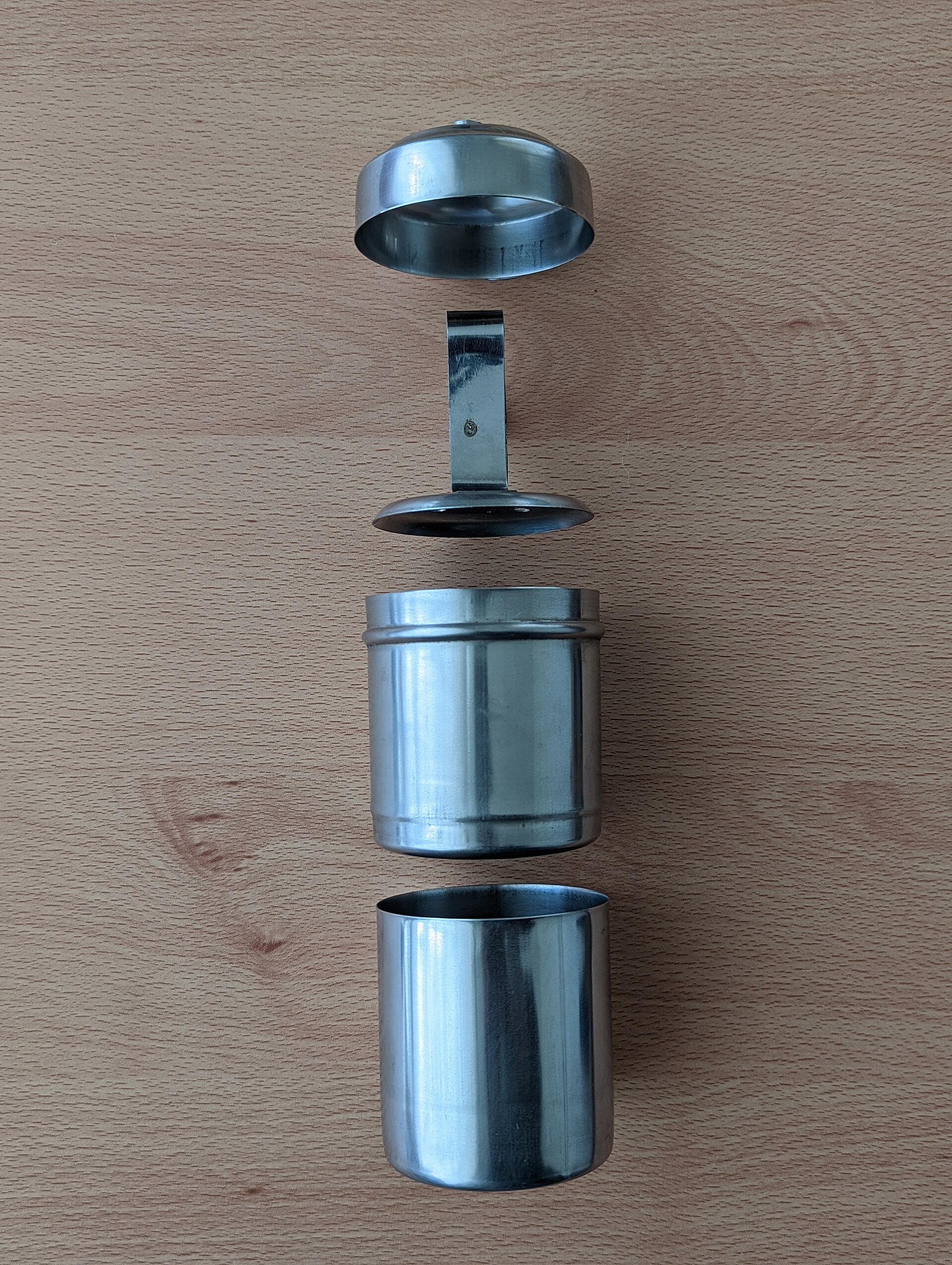
.jpg)
The thing that strikes visitors about Tamil filter coffee is the pouring. A small stainless steel tumbler and a wide lipped bowl called a dabara are held apart at arm's length and the coffee is thrown from one to the other in a long stream, several times, until it foams. It looks like performance. It is actually function. The pour cools scalding coffee to drinkable temperature in seconds, aerates it into a stable foam, and mixes decoction, milk and sugar more thoroughly than a spoon would. The dabara also lets you drink without putting your lips to the tumbler, which matters in a culture with strong ideas about shared vessels.
The drink itself is made in two stages, and the first one is slow. The filter is a two chamber stainless steel cylinder. Ground coffee goes into the upper chamber, which has a perforated base, and is pressed down with a plunger disc. Hot water is poured on top, the lid goes on, and gravity does the rest over anything from twenty minutes to several hours. What collects below is decoction, a concentrated, syrupy, almost black extract. It is not espresso and it is not drip coffee in the western sense. The long contact time and the fine, dark grind produce something with very low acidity and a heavy body, which is exactly what survives being cut with a large volume of hot milk.
The chicory question
Most commercial South Indian coffee powder is a blend, and most of it contains chicory, typically somewhere between a tenth and a third of the mixture. Chicory is a roasted root, not a coffee bean, and it contains no caffeine. It was originally added in Europe and then in India as an economy, a way of extending expensive coffee, and it arrived in Indian blends through that colonial commercial route.
It stayed for reasons that have nothing to do with cost. Chicory extracts readily in the slow gravity filter, contributes a dark colour and a bitter, slightly caramel edge, and thickens the decoction so it does not vanish into the milk. Take it out and a filter coffee made the traditional way tastes thin. This is now a live argument. Specialist roasters selling single estate Indian arabica market chicory free blends as the purer product, while a large part of the drinking public regards a decoction without chicory as simply not filter coffee. Both positions are defensible and the disagreement is genuine rather than a matter of one side being uninformed.
Where the beans come from
Indian coffee is a hill crop, grown almost entirely under shade beneath native trees, frequently interplanted with pepper vines, cardamom and areca. The bulk comes from Karnataka, principally Kodagu, Chikmagalur and Hassan, with significant production in Wayanad in Kerala and in the Tamil Nadu hills of the Nilgiris, the Shevaroys around Yercaud and the Palani range, and from the Araku valley in Andhra Pradesh. Several of these origins hold registered geographical indications, including Coorg Arabica and Monsooned Malabar, the latter being a genuinely strange product in which beans are spread in open sided warehouses during the southwest monsoon and allowed to absorb moisture until they swell and pale, losing acidity. The process began as an accidental imitation of what long sea voyages in wooden ships used to do to the cargo.
The traditional origin story of Indian coffee credits a seventeenth century Sufi, Baba Budan, with carrying seven coffee beans out of Yemen and planting them in the Karnataka hills that now bear his name. It is a durable and well loved account, and it is tradition rather than documented history. What is documented is the plantation economy that followed under British ownership in the nineteenth century, dependent on migrant labour under conditions that were often severe, a history that sits underneath the comfortable domestic ritual and is rarely mentioned alongside it.
A drink with a social geography
Coffee in the Tamil country is a morning obligation before it is a pleasure. The filter is set up the night before or first thing, and decoction is made in a batch and kept, so that the household can produce a tumbler on demand through the day. The vocabulary is specific: kaapi for the drink, degree coffee for the best grade, a term particularly associated with Kumbakonam. Explanations for the word degree vary, one connecting it to the first extraction of decoction and another to the use of a lactometer to certify undiluted milk, and neither explanation is settled.
The institutional side is worth noting too. The Indian Coffee House chain, run as a network of worker cooperatives from the late 1950s after the state marketing board withdrew from retailing, spread the drink and a particular kind of unhurried public space well beyond the south. Meanwhile the household filter is quietly losing ground to instant powder and to espresso machines, and to the plain fact that a device requiring an hour of unattended dripping fits a certain kind of morning and not others. Where it persists, in Chennai homes, in Madurai messes, in Tamil kitchens in Singapore and Sydney, it persists as a routine rather than a treat, which is probably the strongest thing you can say about any food custom.
References
- WikipediaIndian filter coffee
- WikipediaCoffee production in India
- WikipediaBaba Budan
- WikipediaCoffee
This is a reference article, written from the sources above. It is background, not news reporting.