The Ancient Voice of Tamil Sangam Literature
Reference library · 942 words
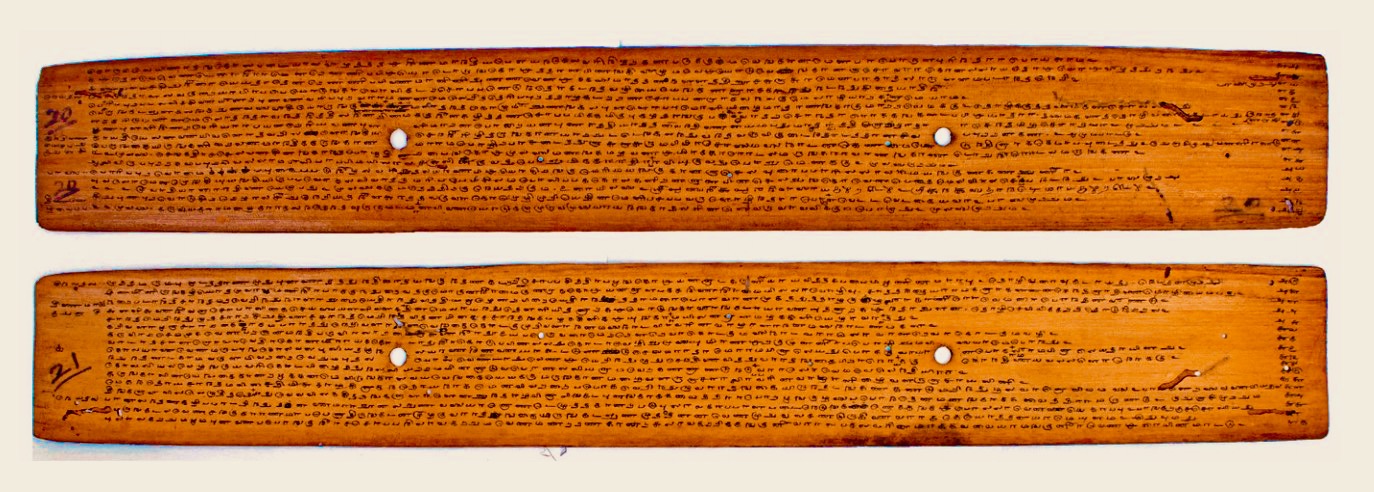
,_Languages_in_the_manuscript_Tamil_Telugu_Sanskrit,_Scripts_Grantha_Telugu_Tamil,_Hindu_Shaivism_monastery,_UVSL_589.jpg)
The oldest surviving literature in any living Indian language is not in Sanskrit. It is in Tamil, and it consists of a body of about two thousand three hundred and eighty poems by roughly four hundred and seventy named poets, more than a hundred of whom are anonymous. This corpus is called Sangam literature, and it is remarkable less for its antiquity than for its subject matter. It is overwhelmingly secular, concerned with love, war, kingship, weather, agriculture, drink and grief, and it treats these without the devotional framing that dominates later Indian literature.
Dating is contested and should be stated carefully. Scholars disagree, with the range usually offered running from around 300 BCE to 300 CE; the philologist Kamil Zvelebil argued that roughly 100 BCE to 250 CE is the most defensible span. Recent archaeological work in Tamil Nadu, including dating from sites such as Keezhadi, has been used to argue for earlier literacy in the region, but the relationship between those finds and the composition dates of these particular poems remains disputed and is sometimes pressed harder in public argument than the evidence supports.
The academy that probably was not
The word sangam means assembly or academy, and Tamil tradition holds that three successive academies of poets met over many thousands of years, the first two lost to the sea. Scholars treat this legend as ahistorical, and it is worth being blunt about that, because the story is repeated constantly as though it were record. The tradition appears in commentarial literature considerably later than the poems, and the timescales it claims are impossible. What the legend probably preserves, in distorted form, is the memory of an actual community of poets and patrons centred on Madurai under the Pandya kings, alongside the Chera and Chola courts.
The corpus is organised into two great groupings. The Ettuttokai, or Eight Anthologies, gathers shorter poems, including Kurunthokai, Natrinai, Akananuru, Purananuru, Ainkurunuru, Patirruppattu, Paripatal and Kalittokai. The Pattuppattu, or Ten Idylls, collects ten longer poems, several of them guide poems in which a bard directs another performer toward a generous patron, with the route described in detail. Alongside these stands the Tolkappiyam, the oldest surviving Tamil grammar, which is also a treatise on poetics and on the conventions the poems observe.
Akam and puram, and the landscapes
The organising distinction is between akam, the interior, and puram, the exterior. Akam poems, which make up around three quarters of the corpus, deal with love, and they follow strict conventions: the lovers are unnamed, spoken of only by role, and the poem is voiced by the woman, the man, a friend, a foster mother or a passer by. Puram poems deal with the public world, chiefly war, kingship, generosity, and the poet's own poverty and dependence on patronage.
Akam poetry is further sorted by tinai, a system in which each phase of a love affair is assigned a landscape, and each landscape carries its own flora, fauna, season, time of day, occupation and deity. Kurinji, the mountain, belongs to union; mullai, the forest and pasture, to patient waiting; marutam, the cultivated riverine plain, to lovers' quarrels and infidelity; neytal, the seashore, to pining and separation; and palai, the arid wasteland, to elopement, hardship and death. The system is not mere decoration. A poem that mentions a jackfruit and a millet field in a mountain setting is telling a Tamil reader which emotional situation is in play before a single feeling is named. This is one of the most economical poetic devices in world literature, and it is entirely indigenous.
The result is a poetry of extraordinary compression. A short akam poem may consist of a woman describing a heron on a salt pan, and every element of that image is doing narrative work. Puram poems, by contrast, can be brutally direct, describing corpse fields, drummed war camps, and kings whose reputation rests on how much they gave away.
Loss, recovery and what came next
This literature very nearly vanished. Through the medieval and early modern centuries the Sangam texts were displaced by devotional Shaiva and Vaishnava poetry and survived only as palm leaf manuscripts held in monasteries and private hands, copied at intervals by scribes and increasingly unread. Their recovery is the work of nineteenth century Tamil scholars, above all U. V. Swaminatha Iyer, who in 1883 found major manuscripts at the Thiruvavaduthurai monastery near Kumbakonam and then spent half a century editing and printing them. He issued the Pattuppattu in 1889, Silappadikaram in 1892, Purananuru in 1894, Manimekalai in 1898, Ainkurunuru in 1903, Patirruppattu in 1904, Paripatal in 1918 and Kurunthokai in 1937, collecting thousands of manuscripts along the way. Modern Tamil literary identity is built on that editorial labour, which is a reminder that classical canons are made as much by editors as by poets.
One common confusion is worth correcting. The Tirukkural, the celebrated collection of 1,330 couplets attributed to Tiruvalluvar, is often described as Sangam literature and is traditionally listed among the Eighteen Lesser Texts. Most scholars, Zvelebil among them, place it after the Sangam period, commonly around 450 to 500 CE, on grounds of grammar, vocabulary and its debt to Sanskrit sources. Nor does the text name its author; the name Tiruvalluvar appears only in a later work. The frequently quoted date of 31 BCE reflects a twentieth century official designation rather than evidence. None of this diminishes the Kural. It simply belongs to a different, slightly later moment, when Tamil letters were already turning from the bardic world the Sangam poets recorded.
References
- WikipediaSangam literature
- WikipediaU. V. Swaminatha Iyer
- WikipediaTirukkural
This is a reference article, written from the sources above. It is background, not news reporting.