Satyajit Ray and the Rise of Bengali Cinema
Reference library · 992 words
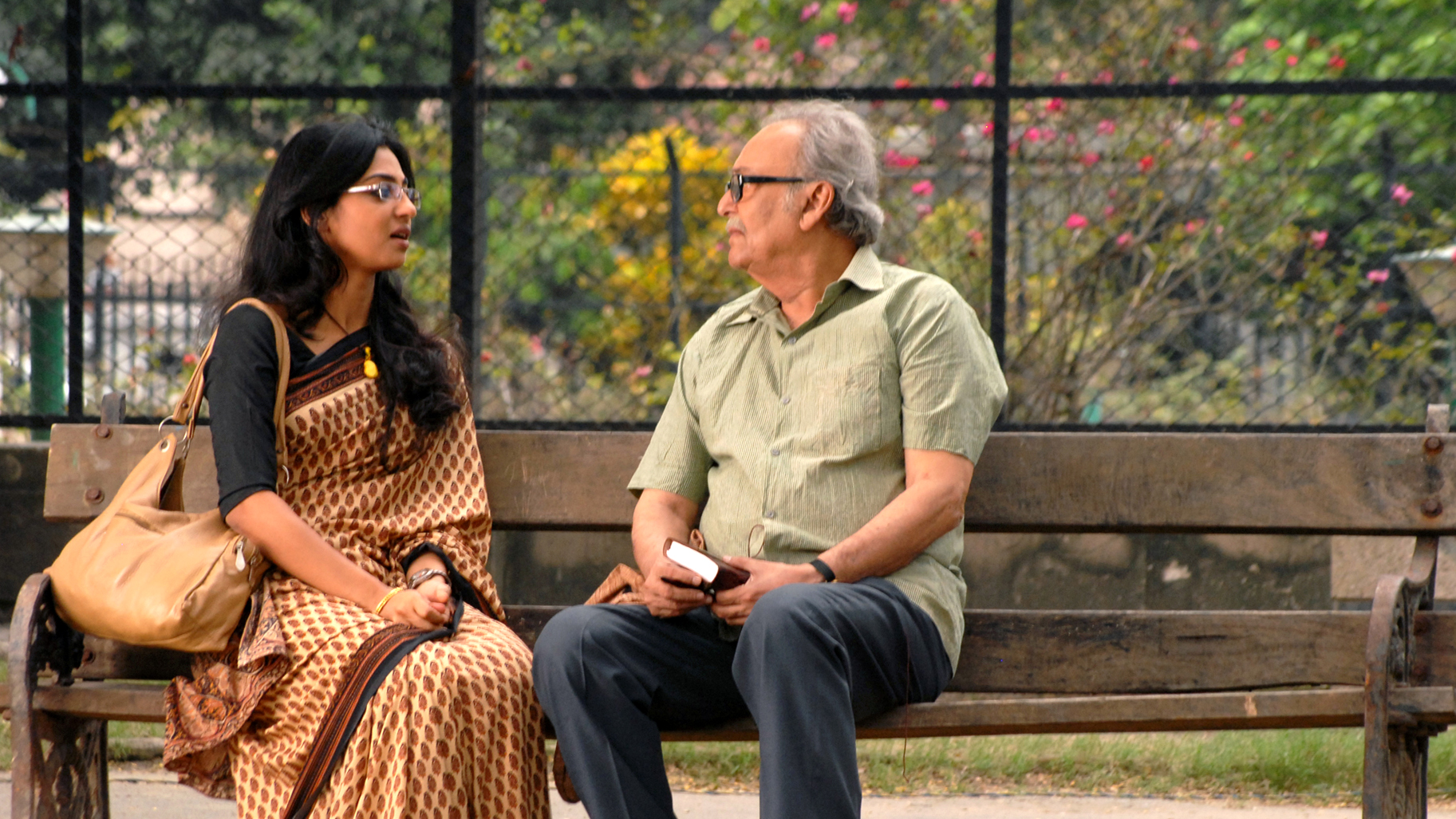

When Pather Panchali opened in Calcutta in 1955, its director had never made a film, most of his cast had never acted, his cameraman had never shot a feature and the production had run out of money so often that it was finished only when the West Bengal government stepped in. The film went on to win a prize at Cannes the following year and to establish, more or less single handedly, the international reputation of Indian art cinema. Satyajit Ray was thirty four.
The making of an unlikely film maker
Ray came from a distinguished Bengali family of printers, illustrators and writers. His grandfather Upendrakishore Ray Chowdhury was a pioneer of halftone block printing and a children's author; his father Sukumar Ray wrote Abol Tabol, the finest nonsense verse in Bengali, and died when Satyajit was an infant. Ray studied at Presidency College and then at Tagore's university at Santiniketan, where the painters Nandalal Bose and Benode Behari Mukherjee taught him to look at Indian art seriously, a training visible in every frame he later composed.
He worked for years as a commercial artist at the British advertising agency D.J. Keymer in Calcutta, and it was there, asked to illustrate an abridged edition of Bibhutibhushan Bandyopadhyay's novel Pather Panchali, that he began to see the book as a film. Two encounters pushed him over. In 1949 Jean Renoir came to Bengal to shoot The River, and Ray, who helped him scout locations, was encouraged to attempt his own film. In 1950 the agency sent him to London, where he saw De Sica's Bicycle Thieves and concluded that a film could be made with non professional actors, real locations and no studio at all.
Shooting proceeded in fragments over roughly three years as funds appeared and vanished. The team Ray assembled stayed with him for decades: the cinematographer Subrata Mitra, who on this film and its successors developed the technique of bouncing light off a stretched white cloth to imitate the flat overcast light of Bengal indoors, the art director Bansi Chandragupta, and the editor Dulal Dutta. Ravi Shankar wrote the score, largely in a single long night session.
The Apu trilogy and after
Pather Panchali follows a poor Brahmin family in a Bengal village through the childhood of the boy Apu and the death of his sister Durga. Aparajito (1956), which won the Golden Lion at Venice, takes Apu to Benares and then to Calcutta, and turns on the quiet cruelty of a son outgrowing his mother. Apur Sansar (1959), introducing Soumitra Chatterjee and Sharmila Tagore, completes the arc with a marriage entered by accident and ended by death. Taken together the three films are among the most sustained studies of ordinary grief in world cinema, and they work because Ray refuses the melodramatic gesture almost everywhere it is available.
What followed was a body of work more varied than his reputation suggests. Jalsaghar (1958) watches a ruined feudal landlord bankrupt himself staging one last music recital. Devi (1960) examines a young woman declared a goddess by her father in law, a film that made the censors nervous. Mahanagar (1963) follows a middle class housewife taking a job as a saleswoman and discovering she is good at it. Charulata (1964), adapted from Tagore's novella Nastanirh, is the film Ray himself said he would change least, a study of a neglected wife, her husband's cousin and the space between them. He also wrote and directed the delightful Goopy Gyne Bagha Byne (1969), from a story by his grandfather, proving he could make a musical fantasy for children without condescension.
The Calcutta trilogy of Pratidwandi (1970), Seemabaddha (1971) and Jana Aranya (1976) turned to the unemployment, corporate compromise and political violence of the city in the Naxalite years, and is markedly angrier than his earlier work. Shatranj Ke Khiladi (1977), his only feature in Hindi and Urdu, adapted a Premchand story about two noblemen playing chess while the British annex Awadh around them. Ray also composed his own music from the mid 1960s, wrote the Feluda detective stories and the Professor Shonku science fiction tales, designed typefaces and edited the children's magazine Sandesh founded by his grandfather. He received an honorary Academy Award and the Bharat Ratna, India's highest civilian honour, shortly before his death in 1992.
Ray was not alone
It distorts the record to treat Bengali cinema as Ray's private achievement. Calcutta had a serious film industry well before him: New Theatres, founded by B.N. Sircar in 1931, produced the 1935 Devdas that made a star of the singer actor K.L. Saigal, and its director P.C. Barua worked in Bengali, Hindi and Assamese.
Two contemporaries pulled in different directions. Ritwik Ghatak, whose films include Meghe Dhaka Tara (1960), Komal Gandhar (1961) and Subarnarekha (1965), was obsessed with the wound of Partition and worked in a register of heightened sound and mythic archetype that is the opposite of Ray's restraint; his reputation has risen steadily since his death in 1976. Mrinal Sen, whose Bhuvan Shome (1969) is often cited as a trigger for the new Indian cinema of the 1970s, and whose Akaler Sandhane (1980) turns a film crew making a film about famine into the subject itself, was the most formally restless of the three.
Ray attracted criticism as well as prizes. The actress and politician Nargis publicly accused him of exporting Indian poverty for foreign approval, an argument that has never entirely gone away, and some Bengali critics found his humanism too gentle for the politics of the time. The charge is worth taking seriously and is also hard to sustain against films such as Jana Aranya. What is beyond argument is the influence: Martin Scorsese and Wes Anderson among many others have named him, and the restoration of the Apu trilogy from fire damaged negatives, completed in the 2010s, put the films back in cinemas for a generation that had only read about them.
References
- Encyclopaedia BritannicaSatyajit Ray
- The Criterion CollectionThe Apu Trilogy
- British Film InstituteBFI, film history and criticism
- Encyclopaedia BritannicaRitwik Ghatak
This is a reference article, written from the sources above. It is background, not news reporting.