Reading Goa's Coastline, Beach by Beach
Reference library · 1025 words
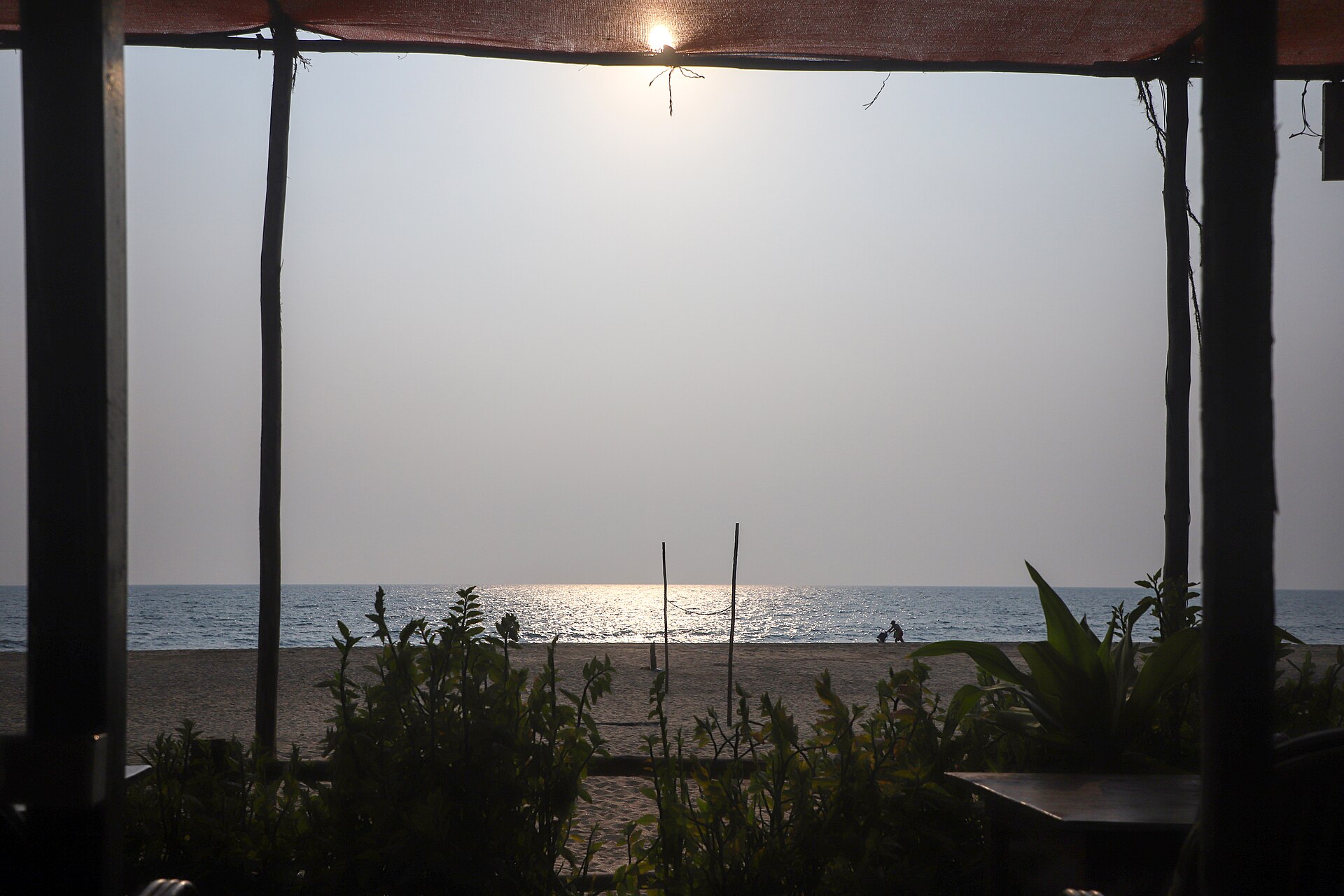

Goa's coast is only about a hundred kilometres long, shorter than a single district's shoreline in several other Indian states, and the reason it feels much longer is that it is broken. Laterite headlands push into the sea at regular intervals, separating one crescent of sand from the next, and a string of estuaries cuts the coast into segments: the Terekhol in the far north, then the Chapora, the Mandovi, the Zuari, the Sal, and the Galgibaga near the Karnataka border. The Mandovi and Zuari together form the practical dividing line that everyone in Goa uses. North of them the beaches are commercial, crowded and continuous. South of them they are wider, quieter and separated by longer stretches of nothing.
The North: Forts, Markets and Crowds
Start at the top. Querim and Arambol, the latter still called Harmal locally, sit below the Terekhol estuary and retain a slow, long stay character, with a freshwater lake behind the beach at Arambol and a sweet water spring. Mandrem and Ashwem follow, quieter and shaded with casuarina. Morjim, at the mouth of the Chapora, is a designated olive ridley turtle nesting beach, which brings restrictions on lighting, vehicles and construction during the nesting season and periodic conflict with beach businesses over enforcement.
South of the river the Chapora headland carries a fort built by the Adil Shahi sultans of Bijapur and rebuilt by the Portuguese in the early eighteenth century, now a ruin with a view rather than a monument. Below it are Vagator's two beaches, Big and Little, separated by rock. Anjuna is the centre of the north's reputation: the Wednesday flea market, once a trading post for long stay travellers selling possessions and now a full commercial bazaar, and the cliffside bars that carry the memory of the counterculture that settled here from the late 1960s. That period is genuinely part of Goa's story, but it is routinely inflated in travel writing into the whole story, obscuring four and a half centuries of Portuguese rule, a much older Konkani and Saraswat society beneath it, and a fishing economy that continues regardless.
Baga and Calangute run together into the busiest continuous stretch of sand in the state, dense with shacks, water sports and coach parties. Candolim and Sinquerim taper south towards Fort Aguada, the great Portuguese work of 1612 built to guard the Mandovi mouth, with a freshwater spring inside that supplied passing ships and a lighthouse added in the nineteenth century. Miramar, at the river mouth, marks the northern segment's end.
Inland from here lie the parts of Goa that a beach itinerary tends to skip and should not. Old Goa, the Portuguese capital abandoned after repeated epidemics, holds the Churches and Convents of Goa inscribed as World Heritage: the Basilica of Bom Jesus, which contains the relics of St Francis Xavier and displays them at expositions held roughly once a decade, the Se Cathedral, and the Church of St Francis of Assisi. In Panaji, the Fontainhas quarter preserves narrow lanes of Portuguese era houses with painted walls and overhanging balcaos.
The South and the Turtle Beaches
South of the Zuari the pattern changes. Bogmalo sits beside the airport, then Velsao, Cansaulim, Majorda and Betalbatim run into Colva and Benaulim, the long central beach of Salcete, backed by dune, coconut and the whitewashed village churches that define the interior. Varca, Cavelossim and Mobor take the sand down to the mouth of the Sal river, which loops back inland and gives the strip its resort character.
Beyond Betul the coast becomes properly quiet. Agonda is a wide, largely undeveloped bay. Palolem, in Canacona, is the near perfect crescent that appears on most photographs of Goa, with Patnem next door and Rajbag beyond. Talpona and Galgibaga at the southern end are the state's other main olive ridley nesting beaches, protected and deliberately underdeveloped, and Polem is the last beach before Karnataka. The Cabo de Rama fort on its headland, older than the Portuguese and taken over by them, gives the best sense of what this coast looked like before any of it was built on.
Rules, Rivers and Feni
Several things confuse first time visitors. The beach shacks are seasonal and licensed annually: they are erected after the monsoon under Coastal Regulation Zone rules that permit only temporary structures within a set distance of the high tide line, and they are dismantled before the rains return. That is why a favourite shack may not be in the same place, or may not exist, the following year. The monsoon between June and September closes most of them, turns the sea dangerous and the interior spectacularly green. Rip currents and drownings are a persistent problem, and the state's lifesaving service marks safe swimming zones with flags that are worth taking seriously. Offshore casino vessels on the Mandovi are a long running political controversy in Goa rather than an attraction with settled status.
The interior repays a day. Divar and Chorao are river islands reached by ferry, the latter holding the Salim Ali bird sanctuary in its mangroves. Cotigao and the Bhagwan Mahaveer sanctuary at Mollem protect Western Ghats forest, and Dudhsagar falls on the upper Mandovi is reached from the Mollem side, with the railway crossing directly in front of it.
On food and drink, a few corrections are due. Vindaloo takes its name from the Portuguese carne de vinha d'alhos, meat in wine and garlic, which the Goan version adapted with palm vinegar and dried chilli; the widespread belief that the name refers to potatoes, from aloo, is a folk etymology and wrong. Feni is distilled either from cashew apple juice or from coconut palm toddy, and the two are different drinks; cashew feni holds a geographical indication. The cashew itself is not native, having been brought by the Portuguese from Brazil in the sixteenth century, which makes Goa's most characteristic spirit a product of the same exchange that produced the chilli in the vindaloo. Beyond that, xacuti, sorpotel, cafreal, ambot tik, poi bread and the layered bebinca are the dishes that reward a traveller who leaves the beach and eats where the fishing boats come in.
References
- UNESCO World Heritage CentreChurches and Convents of Goa
- Goa Tourism Development CorporationGoa Tourism
- Government of GoaGovernment of Goa official portal
- Incredible India, Ministry of TourismGoa
This is a reference article, written from the sources above. It is background, not news reporting.