Qawwali: Devotional Music That Builds to Ecstasy
Reference library · 1081 words
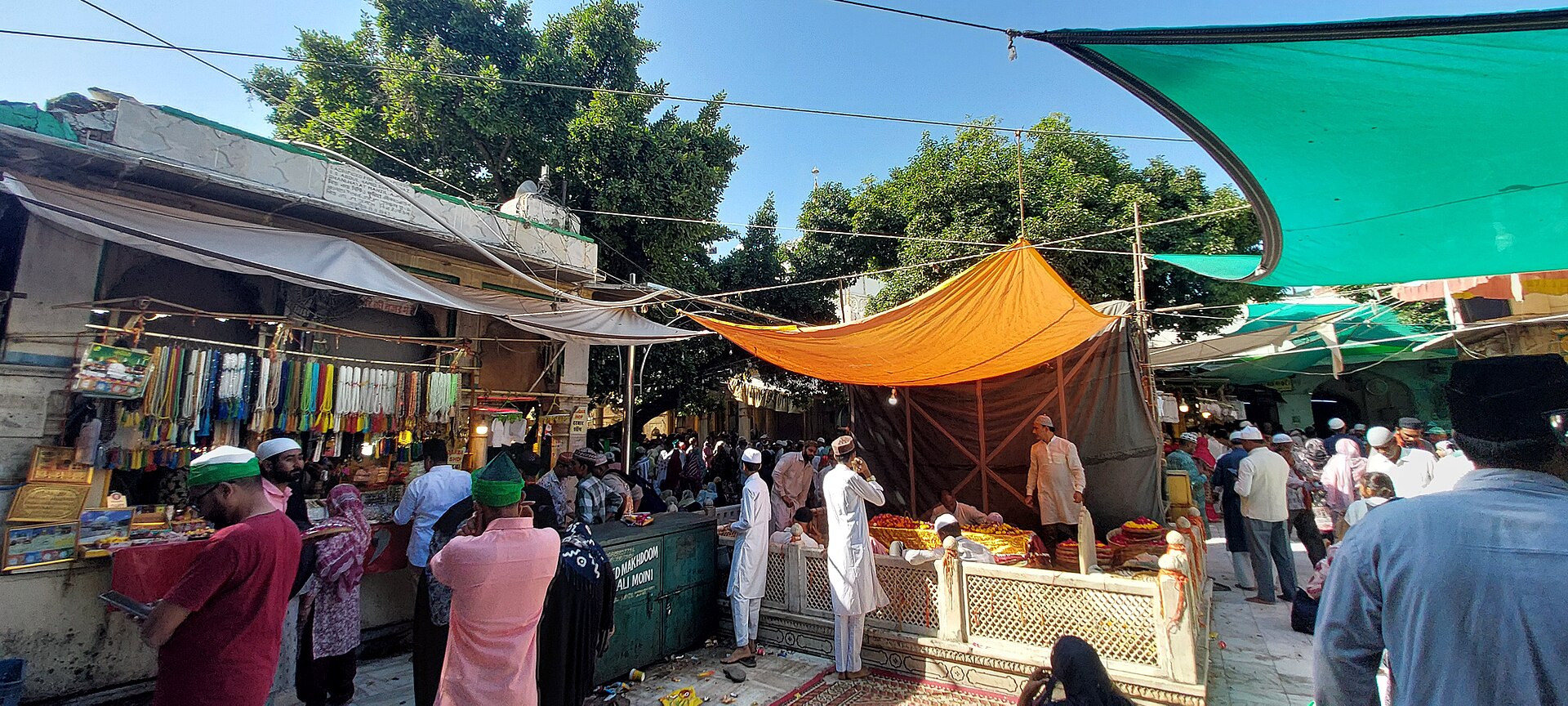

Qawwali is the devotional singing of the Sufi shrines of South Asia, performed above all at the tombs of saints of the Chishti order in India and Pakistan. Its purpose is not entertainment and not, strictly speaking, performance. It is a technology of attention: an assembly of singers, drums, harmonium and clapping hands designed to carry a listener, through repetition and rising intensity, out of ordinary self-consciousness and into a state the tradition calls hal or wajd, a condition of ecstatic absorption in the divine.
The framework for this is sama, literally listening, the Sufi practice of using music and poetry as a spiritual discipline. Sama has never been uncontroversial within Islam. Many jurists have held music to be impermissible, and the Chishti masters who defended and institutionalised sama did so against opposition that has never disappeared. Reformist currents in South Asia have long objected to shrine devotion and its music, and in recent decades that objection has occasionally turned violent, with attacks on shrines and on musicians. The tradition therefore exists inside a live religious argument, not in a settled consensus.
Khusrau, the qaul, and where the name comes from
The word qawwali derives from qaul, an utterance or saying, specifically a saying of the Prophet Muhammad. The foundational piece of the repertoire, Man kunto Maula, sets one such saying, and it is performed at the opening of countless assemblies. A qawwal is one who speaks the qaul.
Tradition credits the poet and musician Amir Khusrau, who lived in Delhi from the mid thirteenth into the early fourteenth century and was a disciple of the Chishti saint Nizamuddin Auliya, with founding qawwali, along with inventing the sitar, the tabla and various musical forms. Khusrau was certainly a major poet and musician, and several qawwali standards are attributed to him, including Chhap tilak sab cheeni and Aaj rang hai. The wider list of inventions attributed to him is legend accumulated over centuries and is not supported by the historical record. What can be said with confidence is that the practice took shape in the Chishti circles of Delhi in that period and spread with the order across the subcontinent.
How a qawwali party is built
A qawwali group, called a party, typically has eight to twelve members seated on the floor in two rows. In front sit the lead singers, one or two, who carry the main melodic line and take the improvisatory initiative. Behind them sit the chorus, who repeat lines, sustain the momentum and, crucially, clap. The handclapping is not decoration: it is a percussion layer, sharply articulated and often syncopated against the drum, and it is one of the sounds by which qawwali is immediately recognisable. Instrumentation is a harmonium, usually two, and a dholak or tabla. The harmonium replaced older bowed and plucked accompaniment during the colonial period and is now inseparable from the sound.
A traditional assembly, a mahfil e sama, follows an order. It opens with a hamd in praise of God and a naat in praise of the Prophet, moves to a manqabat honouring a saint of the lineage or, in many parties, Ali, and then proceeds to the ghazals and mystical lyrics that occupy most of the evening. Poetry is drawn from many languages and centuries: Persian, Urdu, the Braj and Awadhi of northern India, Punjabi and Saraiki. Bulleh Shah, Baba Farid, Shah Hussain and Sultan Bahu supply much of the Punjabi repertoire.
The defining artistry is girah bandi, literally tying a knot. As a qawwal repeats a line, he interpolates couplets from other poets, chosen on the spot, that illuminate or intensify the line at hand. A skilled qawwal reads the assembly, notices which listener is responding to which idea, and inserts verses accordingly, so that the same song performed on two nights is not the same song. Repetition is the engine: a single phrase may be returned to dozens of times, each time with a different melodic approach, higher, slower, more insistent, until the meaning is worn smooth and something else comes through. Tempo generally rises across a piece, and a long qawwali can run for half an hour or more.
When a listener is visibly moved, offerings of money, nazrana, are placed before the singers or showered over them, and at a shrine a portion goes to the shrine itself. The custom looks transactional to an outsider and is understood within the tradition as an acknowledgement of grace received.
Shrines, records and the modern audience
Qawwali is still best heard where it belongs. The dargah of Nizamuddin Auliya in Delhi holds assemblies on Thursday evenings, in a courtyard packed to the walls. Ajmer Sharif in Rajasthan, the tomb of Moinuddin Chishti, draws enormous crowds at its annual urs, the commemoration of a saint's death understood as a union with the divine. In Pakistan the shrines at Pakpattan, Lahore and Sehwan Sharif in Sindh are principal centres, and the song Dama dam mast qalandar, addressed to the saint of Sehwan, is probably the single most widely known Sufi song in South Asia.
The tradition reached a global audience largely through one voice. Nusrat Fateh Ali Khan, who died in 1997, inherited a family qawwali lineage from Faisalabad and combined formidable classical training with an improvisational range that astonished listeners who understood none of the words. Recordings issued internationally from the late 1980s, including collaborations released on Peter Gabriel's Real World label, made him one of the most recognised singers of the twentieth century and drew Western musicians into the form. Other major lineages, among them the Sabri Brothers, Aziz Mian and the Warsi and Wadali families, sustained different approaches, some closer to shrine practice, some more openly virtuosic.
Hindi cinema has borrowed the form since at least the mid twentieth century, most famously in the competitive qawwali sequences of films such as Barsaat Ki Raat in 1960 and Amar Akbar Anthony in 1977, and many listeners first encounter it there. Film qawwali is a real branch of the tradition, but it is a secular and dramatic one, and it does not attempt what a shrine assembly attempts. The danger of the global concert circuit is the same: applause at the end of a piece is a different response from the one qawwali was built to produce. The music survives commercially because it travels, and survives spiritually because the courtyards are still full on Thursdays. Both facts are true at once.
References
- Encyclopaedia BritannicaQawwali
- Encyclopaedia BritannicaAmir Khusraw
- Encyclopaedia BritannicaNusrat Fateh Ali Khan
- Sangeet Natak Akademi (Government of India)Sangeet Natak Akademi
- Smithsonian Folkways RecordingsSmithsonian Folkways Recordings
This is a reference article, written from the sources above. It is background, not news reporting.