Chikankari: Lucknow's Language of White Thread
Reference library · 1063 words

Chikankari is embroidery that works by subtraction as much as addition. Traditionally it is white untwisted cotton thread worked on fine white cotton, and because the thread and the cloth are the same colour, the design registers only through the interplay of texture, shadow and transparency. A muslin kurta covered in chikan work looks, from a distance, like nothing at all; close up, it resolves into a garden of trailing stems, small flowers, mango forms and open lattices. It is one of very few embroidery traditions in the world that deliberately refuses colour contrast as its main effect.
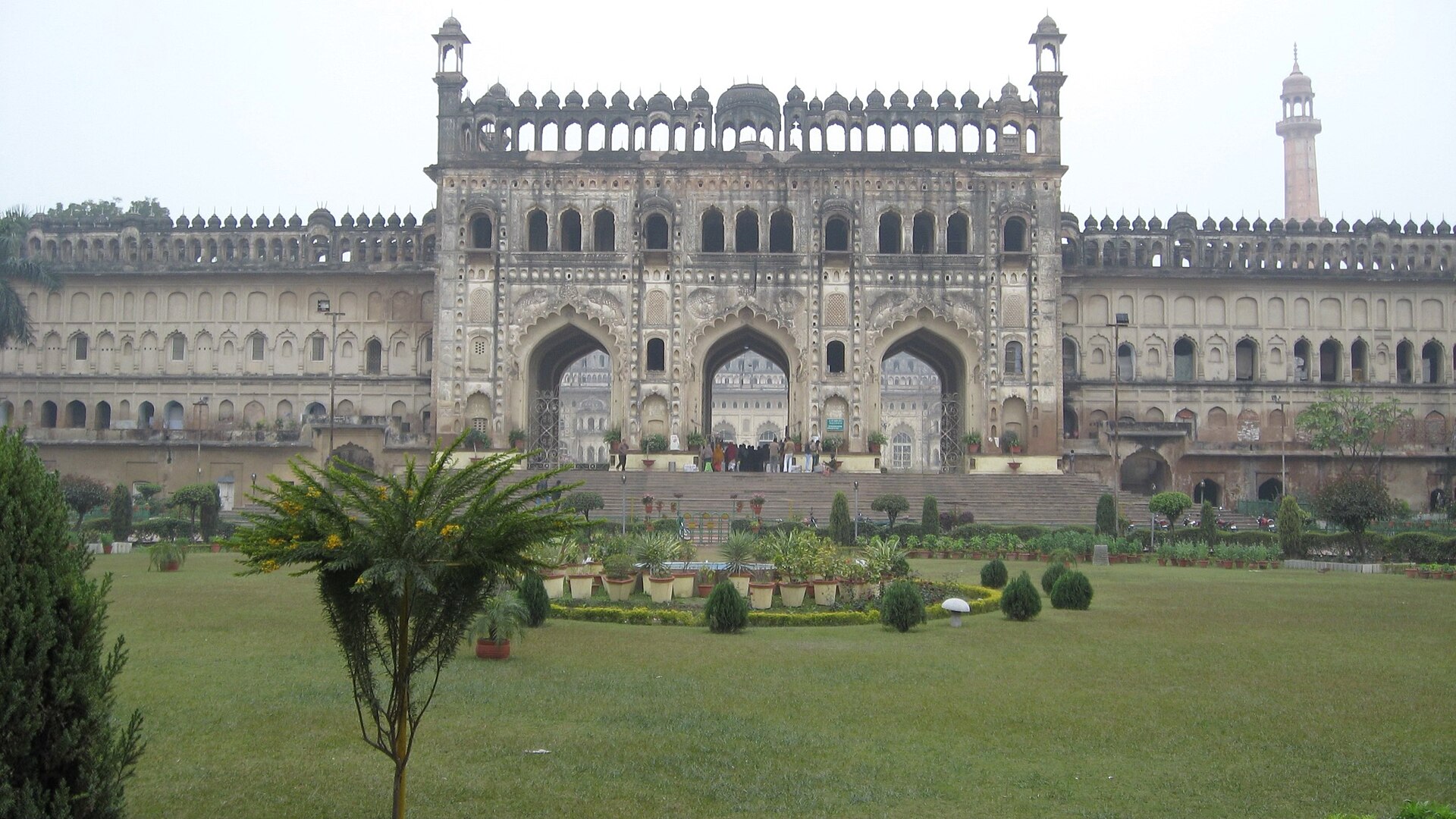
The craft is concentrated in Lucknow, capital of Uttar Pradesh and formerly of the kingdom of Awadh, and in surrounding districts. It received geographical indication protection in the late 2000s. Its association with Awadhi courtly refinement is genuine: the Nawabi period of the eighteenth and nineteenth centuries, which produced the Bara Imambara and the Rumi Darwaza, also patronised muslins, perfumery, cuisine and this embroidery. The most commonly repeated origin story credits the Mughal empress Nur Jahan with introducing it, and it should be treated as legend rather than fact. The word itself is variously derived from a Persian term for an embroidered fabric and from a Bengali word meaning fine or elegant, and the technique has plausible relatives in Persian white-on-white work and in the muslin embroidery traditions of Bengal.
The stitches, and why some cost far more than others
Practitioners commonly speak of around thirty-two distinct chikan stitches, though the exact number varies between sources and some are rarely worked today. They fall into three families, and the family determines the price.
The flat stitches lie on or just under the surface. Taipchi is a simple running stitch used for outlines and for filling in cheap work; a garment made only of taipchi is the bottom of the market. Pechni whips a running stitch to make a raised cord. The most admired flat technique is bakhia, or shadow work, in which a herringbone stitch is worked entirely on the reverse of a sheer fabric so that the crossed threads show through the front as a soft opaque bloom bounded by two neat outlines. Bakhia is what gives a chikan dupatta its characteristic ghostly leaves.
The embossed or grainy stitches are the connoisseur's category. Murri is a knot worked over a satin-stitched base and drawn out into the shape of a grain of rice, used for flower centres; phanda is a smaller, rounder version resembling a millet seed. Both are slow, both require a very steady hand, and a piece densely covered in murri work commands a multiple of the price of the same design in taipchi. Murri is the first thing that disappears when a workshop cuts costs.
The third family is jaali, the open lattice that appears where the cloth becomes a net. This is where chikankari differs decisively from European cutwork or drawn-thread embroidery: in true jaali no thread is cut and none is pulled out. The embroiderer uses the needle to tease the warp and weft threads apart, opening small square holes, and secures each hole with minute stitches around its edge, so the fabric's own threads are simply redistributed. Different arrangements have names, among them madrasi jaali, sidhaul and bulbul chashm, the nightingale's eye. Held to the light, a good jaali panel is perfectly regular and has no severed threads on the reverse.
A production line spread across a city
No single person makes a chikan garment. The process begins with a designer and a block printer, who stamps the design onto cut fabric pieces using wooden blocks and a washable blue paste, using the same block-carving craft that serves Rajasthani textile printing. The printed pieces then move to embroiderers, and here the division becomes very fine indeed: one artisan may do only bakhia, another only jaali, another only the murri flower centres, with the pieces travelling between households and villages around Lucknow between each stage.
When the embroidery is complete the garment goes for dhulai, washing, which removes the printed blue guidelines and is a specialist trade of its own conducted at washing ghats and workshops. It is then starched, traditionally with a rice or arrowroot preparation known as kalaf, which gives new chikan its crispness, and finally stitched into a finished garment. Only after washing does the design appear as intended, which means the embroiderers themselves rarely see the completed effect of their own work.
The overwhelming majority of chikan embroiderers are women working from home on piece rates, and their rates are low. This is the central social fact of the craft. Because the work is decentralised, unregistered and done inside the house, it has historically fallen outside labour protections, and the value added by dozens of hands is captured mostly by exporters and retailers in Chowk and Aminabad. Organisations including the Self Employed Women's Association in Lucknow and various craft cooperatives have worked for decades to organise embroiderers, raise rates and sell directly, and they have changed conditions for some artisans without altering the structure of the trade overall.
Machines, imitations and how to look
Computerised embroidery machines can now produce a passable imitation of taipchi and of shadow work, and large volumes of machine-made goods are sold in Lucknow itself as hand chikan. The distinguishing signs are learnable. Machine work is metronomically even, its reverse shows a continuous bobbin thread and often a backing residue, and it cannot produce a true jaali, since the machine has no way to part fabric threads without cutting. Handwork shows small irregularities, motifs that vary slightly from one repeat to the next, and, on the reverse of a shadow-worked leaf, a clean herringbone rather than a flat filled shape. Genuine murri knots stand up from the cloth and can be felt with a fingertip.
Chikankari is also frequently combined with mukaish or badla work, in which fine metal strips are twisted into the cloth to make tiny glittering points, a related Lucknow craft with even fewer surviving practitioners. Contemporary production has moved well beyond white on white: georgette, chiffon, silk and coloured grounds now dominate the market, and coloured thread is common. Purists regard the shift as a dilution; it is also the reason there is still an industry large enough to employ hundreds of thousands of people in and around the city.
References
- Victoria and Albert MuseumSouth Asia collection
- Encyclopaedia BritannicaLucknow
- Intellectual Property India (Government of India)Geographical Indications Registry
- Self Employed Women's Association (SEWA)SEWA
This is a reference article, written from the sources above. It is background, not news reporting.