Litti Chokha: Bihar's Fire Roasted Comfort Food
Reference library · 939 words
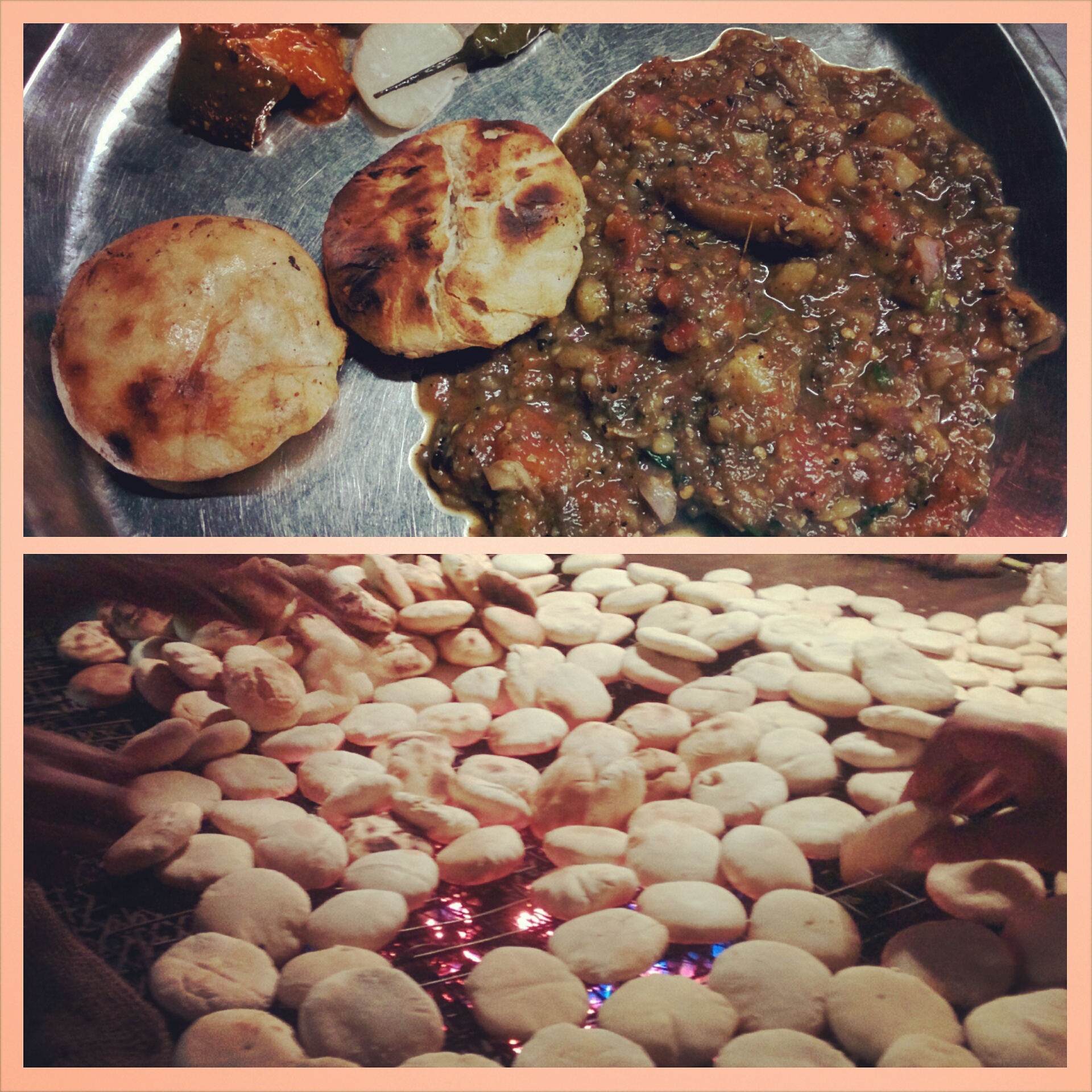

A litti looks like nothing much. It is a ball of wholewheat dough, roughly the size of a small fist, stuffed with a spiced mixture of roasted gram flour and cooked directly over fire until the outside is blistered and cracked. Broken open at the table, it releases a burst of steam and a smell of toasted chickpea, mustard oil and carom seed. It is then drowned in ghee and eaten with chokha, a plate of roasted vegetables mashed with raw mustard oil and green chilli. There is no gravy, no rice, no elaborate service. It is one of the most economical complete meals in Indian cooking, and one of the most difficult to fake.
The whole thing depends on sattu. Sattu is flour made from grain or pulses that have been dry roasted before grinding, most often Bengal gram, sometimes barley or a mixture. The roasting is traditionally done in an iron vessel with hot sand, which cooks the grain evenly without burning, after which the sand is sieved out and the grain milled. Because the flour is already cooked, it can be eaten without further heating, which is why sattu doubles as a summer drink across Bihar, Jharkhand, eastern Uttar Pradesh, West Bengal and the Nepali Terai: stirred into cold water with salt, lemon and roasted cumin, or with jaggery for a sweet version. High in protein, cheap, and stable in heat without refrigeration, it is the sort of ingredient that a hot, poor, agricultural region would be foolish not to build a cuisine around.
Food That Needs No Kitchen
The genius of litti is that it requires no pot. Dough and filling can be prepared in advance, carried, and baked on whatever fire is available: cow dung cakes, wood coals, a field fire, later a tandoor or an oven. Cooked through, a litti keeps for a day or two without spoiling, and the ghee is added only at the point of eating. That combination made it food for farmers working distant fields, for travellers, and for anyone without a settled hearth.
Popular accounts push this further, attributing litti to the armies of Magadha, to Chandragupta Maurya's soldiers, or to rebels of 1857 who needed rations that would not give away a camp. These stories circulate widely and none of them rests on evidence a historian would accept. They are best read as folk explanations of a genuine practical quality rather than as history. What can be said with confidence is that the dish belongs to the Bhojpuri, Magahi and Maithili speaking belt and that its logic is the logic of portable, fuel efficient food.
The making rewards attention. The dough is wholewheat, worked with a little ghee or oil, sometimes ajwain, and kept firm rather than soft. The filling is sattu loosened with mustard oil and sharpened with garlic, ginger, green chilli, chopped onion, coriander leaf, ajwain, nigella seed, lemon juice and, crucially in most households, a spoonful of the masala scraped from a jar of mango pickle. That pickle masala does more work than any single spice. The filled ball must be sealed properly, or it splits and empties into the fire. Cooking over dried cow dung cakes gives a particular slow, mild smoke that coal does not replicate, which is why purists insist on it and why urban versions taste different rather than merely worse.
Litti is regularly confused with the Rajasthani baati of dal baati churma. They are not the same dish. Baati is unstuffed, denser, and served with dal and a sweet crumble. Litti is defined by its sattu filling and is served with chokha. The confusion is understandable, since both are fire baked wheat balls soaked in ghee, but treating one as a variant of the other misses what each is for.
The Other Half of the Plate
Chokha is deceptively plain. Aubergine, potato and tomato are roasted whole in embers until the skins char and collapse, then peeled and mashed together or separately with raw mustard oil, finely chopped onion, garlic, green chilli, coriander and salt. Nothing is fried. The mustard oil goes in uncooked, and its pungency is the point. Roasted garlic is often crushed in whole.
This too is often mislabelled. Chokha is not baingan bharta. Bharta, in its Punjabi form, is roasted aubergine cooked down further in a pan with onion, tomato and a fried masala. Chokha stops at the mashing. The difference is between a cooked curry and a raw dressed mash, and it changes the whole character of the meal: chokha's job is to cut the richness of a ghee soaked litti, which a cooked, oily bharta would not do.
From Field to Food Stall
Ownership of litti chokha is disputed in the way regional dishes usually are. Bihar claims it most loudly, eastern Uttar Pradesh claims it with equal conviction, and Jharkhand and the Madhesh province of Nepal cook it as everyday food. The dish predates all the current state boundaries, and the argument is unlikely ever to be settled, nor does it need to be.
What has changed is visibility. Decades of labour migration from Bihar to Delhi, Kolkata, Mumbai and the Gulf carried the dish outward, and litti stalls now appear far from the Ganges plain, including in Indian neighbourhoods in Australian cities. Restaurant versions tend to be softer, oven baked, sometimes deep fried, and served with a chokha that has been smoothed into something closer to a dip. The best test remains the simplest one. A good litti should crack rather than tear, smell of toasted gram before it smells of ghee, and leave your fingers oily. Everything else is presentation.
References
- WikipediaLitti (dish)
- WikipediaSattu
- WikipediaBihari cuisine
This is a reference article, written from the sources above. It is background, not news reporting.