Khorisa: The Bamboo Shoot That Defines Assamese Cooking
Reference library · 1066 words
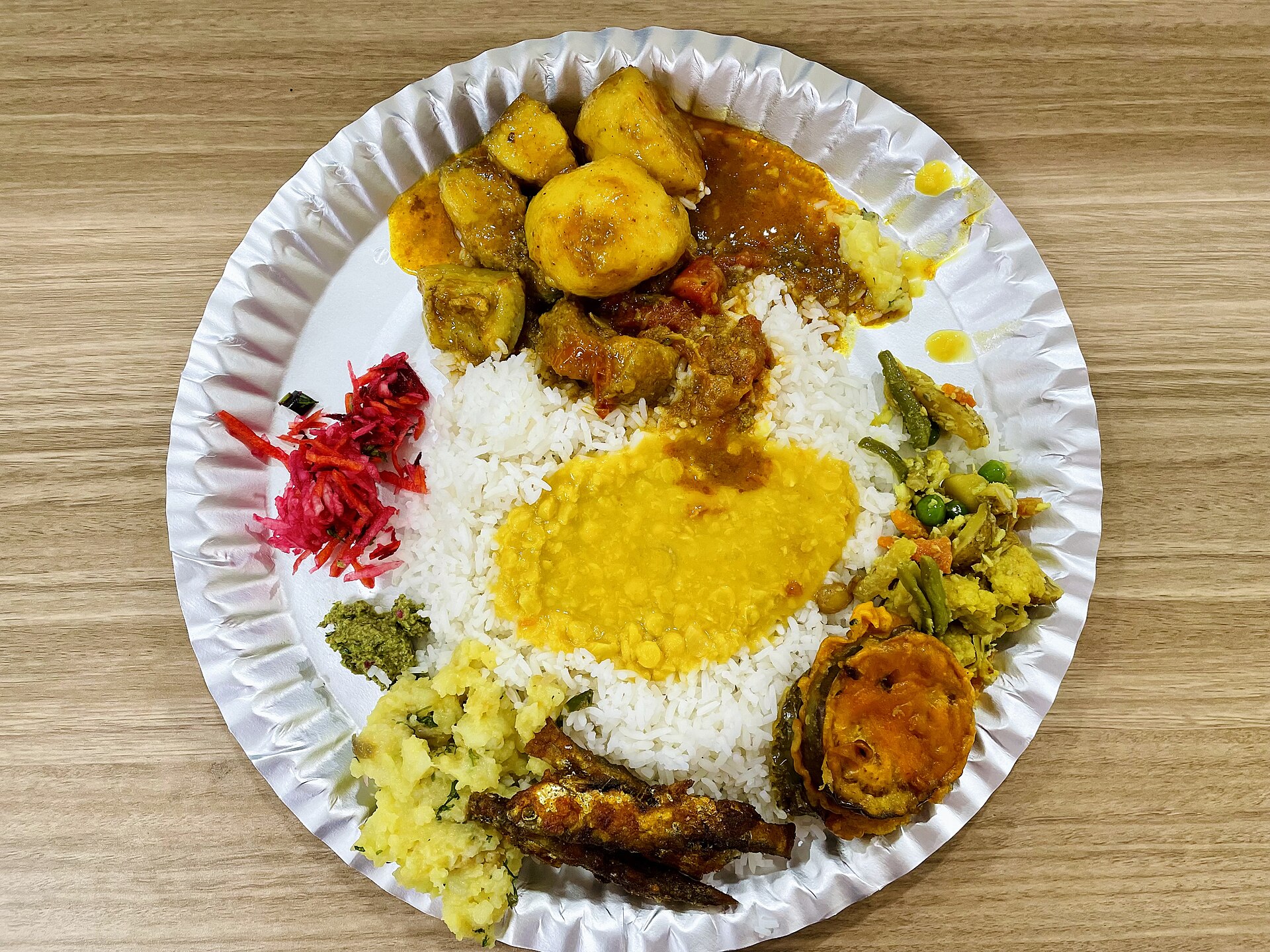

Few ingredients divide a room as quickly as khorisa. Prise the lid off a jar of fermented bamboo shoot in an Assamese kitchen and the smell arrives first: sharp, faintly cheesy, with a sourness sitting somewhere between pickled cabbage and green mango. For anyone raised in the Brahmaputra valley it is the smell of a proper meal. For a newcomer it can take a few sittings. Either way, khorisa is not a garnish or a novelty. It is one of the load bearing flavours of Assamese cooking, standing alongside khar and tenga, and it explains a great deal about how the region eats.
Bamboo is the obvious starting point. Assam sits inside one of the densest bamboo belts in the world, and the plant supplies house frames, fences, fish traps, musical instruments and food. The edible part is the young shoot, harvested when it has barely pushed above the soil and is still tender enough to cut with a thumbnail. Species commonly used include Bambusa tulda and Dendrocalamus hamiltonii, though households tend to speak of shoots by local name rather than botanical one. Harvest is tied to the monsoon, roughly June into September, which is precisely the problem fermentation solves: a glut of a highly perishable vegetable arriving all at once, in a climate where nothing keeps.
How a Shoot Becomes Khorisa
The method is simple and unforgiving. The outer sheaths are stripped until only the pale inner core remains. That core is sliced, shredded or grated, then packed tightly into a container, traditionally a section of green bamboo sealed with leaves, more often now a glass or earthen jar. Compression matters, because the aim is to exclude air so that lactic acid bacteria already present on the shoot take over rather than moulds. Some households add a little salt, some none at all, relying on the shoot's own moisture to form a brine. The jar sits in a warm corner for anything from a week to several months. The longer it waits, the sourer and softer the result.
There is a chemical reason behind all this handling, not merely a culinary one. Raw bamboo shoots contain cyanogenic glycosides, chiefly taxiphyllin, which can release hydrogen cyanide when the plant tissue is damaged. This is why bamboo shoots are boiled before eating almost everywhere they are eaten, and why fermentation is prized: both heat and microbial action break these compounds down. Traditional practice worked this out long before anyone named the molecule. Cooks who insist the first boiling water must be thrown away, or that the jar must be left long enough, are passing on food safety knowledge in the language of custom.
Two products emerge from the same process. Khorisa in its plainest form is the fermented shoot itself, sour and firm. Mashed and dressed with mustard oil, chilli and sometimes garlic, it becomes a relish eaten in small quantities beside rice. Assamese usage also recognises khorisa tenga, mashed fermented shoot deployed as the sour element of a dish, and the fresh shoot known as bah gaj, which behaves quite differently: sweeter, crunchier, closer to a vegetable than a seasoning.
Where It Sits in an Assamese Meal
Assamese cooking is organised around two poles. At one end is khar, an alkaline preparation made by filtering water through the ashes of sun dried banana peel, which conventionally opens the meal and can be built on raw papaya, mustard greens, pulses or fish. At the other end is tenga, the sour course, usually a light fish dish soured with thekera, elephant apple, tomato, lemon or roselle leaves. Convention holds that khar and tenga do not appear in the same meal, though that rule has loosened badly in restaurants and city kitchens.
Khorisa complicates the neat scheme. Dishes built on fermented bamboo shoot are unmistakably sour, yet they are not classed as tenga. The sourness has a different character, fermented rather than fruity, with a savoury depth that fruit acids cannot supply. Khorisa is most at home with strong proteins. Pork with khorisa is the classic pairing, the fat of the meat softened by the acid. Fish cooked with khorisa is common through the valley, and chicken and duck versions exist. Vegetarian uses are fewer but real, most often with potato, and the relish itself is eaten by everyone.
Not an Assamese Invention, and No One Proves Otherwise
It is tempting to write khorisa up as uniquely Assamese, and articles regularly do. The claim does not survive a look across the state border. Manipur ferments bamboo shoot into soibum, a product with its own texture and its own dedicated processing sheds, used in dishes such as soibum thongba. Nagaland has bastenga, strongly associated with pork. Meghalaya, Mizoram, Tripura, Arunachal Pradesh and Sikkim all keep versions, as do neighbouring parts of Nepal and Bhutan. Beyond South Asia the practice runs through Thailand, Laos, Myanmar, southern China, Korea and Japan. What exists is a broad bamboo fermenting belt, defined by climate and plant distribution rather than by any single culture, in which each community has arrived at slightly different textures, salt levels and companion ingredients.
Origin stories crediting a named individual or a single kingdom with inventing the technique deserve suspicion. Fermenting a seasonal glut is the kind of practice that emerges independently wherever conditions demand it, and the documentary record for the northeast is far too thin to settle priority. The more useful question is not who was first but why the versions differ, and there the answers are concrete: shoot species, ambient temperature, whether salt is scarce, and what meat the household eats.
Khorisa has travelled in the past two decades. Bottled versions from Guwahati now reach Indian metros and diaspora grocers in Melbourne, Sydney, London and Toronto, and northeastern restaurants outside the region have made pork with bamboo shoot a signature. Something is lost in transfer. Commercial khorisa tends to be milder, more heavily salted and more uniform, because a product varying from jar to jar is hard to sell. Home fermentation stays variable by nature, which is exactly what its defenders like about it. For a cook meeting khorisa for the first time, restraint is the sensible approach: stir a spoonful into a pork or fish curry near the end of cooking, taste, and add more only if the dish can carry it. It is an ingredient that rewards patience at both ends of its life.
References
- WikipediaAssamese cuisine
- WikipediaBamboo shoot
- WikipediaManipuri cuisine
This is a reference article, written from the sources above. It is background, not news reporting.