Kabir's Verses: Mysticism in Plain Language
Reference library · 1003 words
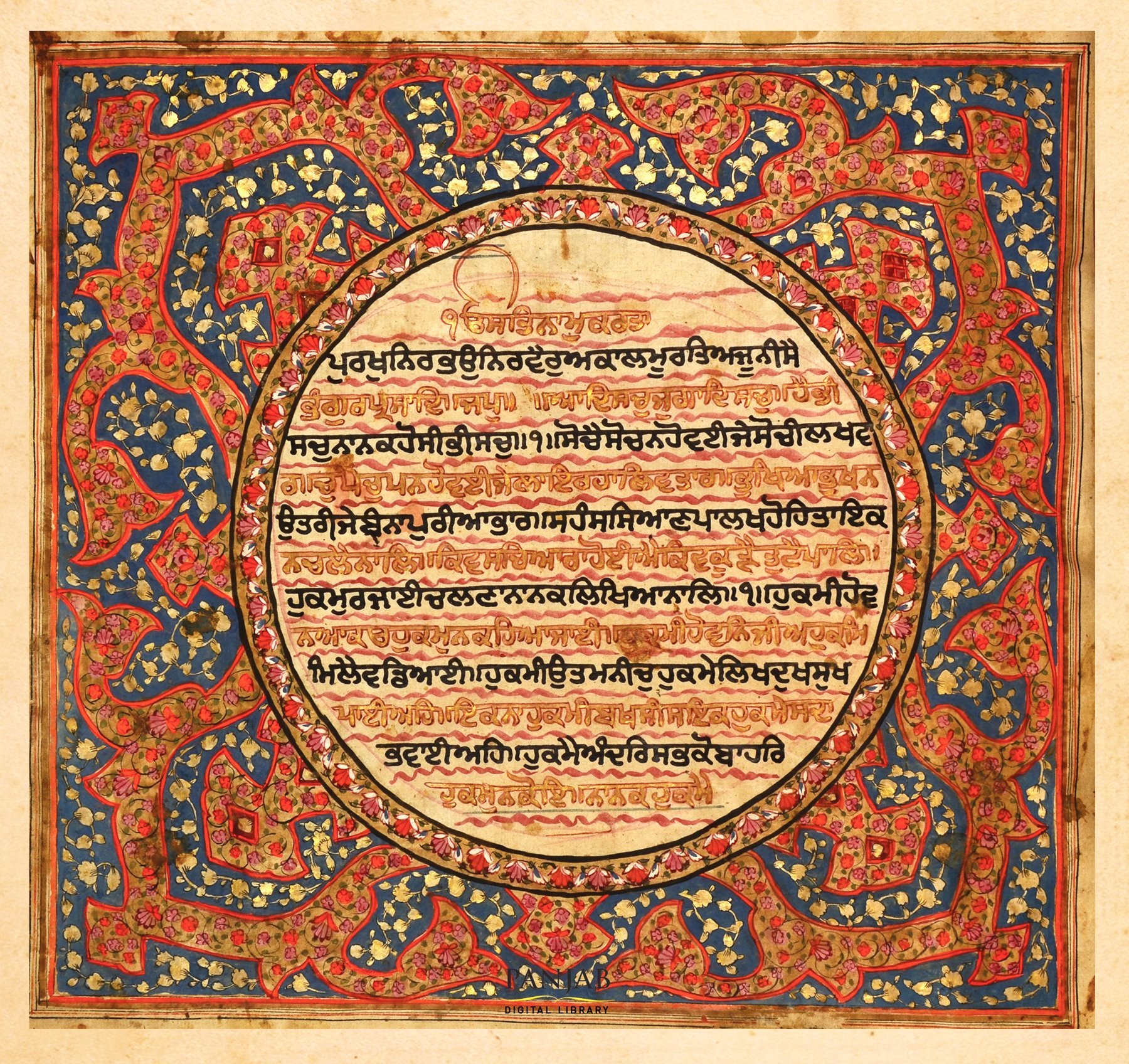

Kabir is the most quoted poet in north India and one of the least documented. He was a weaver in Banaras, probably in the fifteenth century, almost certainly from a family of Muslim weavers who had converted relatively recently and retained a good deal of their older practice. He appears to have been unable to read or write. He left no manuscript. And yet couplets attributed to him are recited by farmers, sung by classical vocalists, printed in school textbooks, included in the Sikh scripture and set to music by rock bands, in a continuous tradition lasting more than five centuries.
A life mostly made of legend
His dates are not settled. Scholarly estimates place him somewhere across the fifteenth and early sixteenth centuries, and the widely circulated span that gives him an implausibly long life comes from sectarian tradition rather than evidence. The stories about him are numerous and largely legendary: that he was born to a Brahmin widow and left on a pond to be found by the weavers Niru and Nima; that he tricked the Vaishnava teacher Ramananda into initiating him by lying on the steps of the Ganges ghat in the dark so the older man would step on him and utter the name of Ram; that he moved to Maghar to die, deliberately choosing a place said to guarantee a bad rebirth, to demonstrate that place does not save anyone. The best known legend concerns his corpse: Hindu and Muslim followers quarrelled over cremation and burial, lifted the shroud, and found only flowers, which they divided. Whether or not any of it happened, the story is a precise summary of what his poetry does.
What the poems actually say, and how they say it
Kabir belongs to the nirguna stream of the bhakti movement, devotion to a God without form or attribute. When he uses the name Ram he does not mean the prince of Ayodhya with a bow; he means an unqualified reality for which any name is a convenience. This distinguishes him from saguna poets such as Surdas and Tulsidas, who worship an embodied deity with a biography, and it is why Kabir has no temple iconography of his own.
From that position he attacks everyone. The Brahmin is asked why, if he is made of superior stuff, he did not arrive into the world by some superior route. The mullah calling from the minaret is asked whether God is deaf. Pilgrimage, ritual bathing, fasting, circumcision, the sacred thread, idol worship and scriptural learning are all dismissed as external business that leaves the practitioner exactly where he was. The tone is not gentle. Kabir is sarcastic, abrupt and frequently rude, and much of the pleasure of reading him is the pleasure of watching authority get hit.
The imagery comes from his trade and from ordinary life. Cloth is his great metaphor: the body is a fine woven sheet, the poet returns it unsoiled while others have stained theirs. Elsewhere he uses the grinding stones of a hand mill, a dyer's vat, a fish thirsty in water, a musk deer searching the world for a scent that comes from its own body. He also wrote a category of deliberately paradoxical verses, the ulatbansi or upside down sayings, in which cows suckle calves that have already grown, or a fish climbs a tree. These are not nonsense; they are designed to break the reader's habit of reasoning, in something like the way a Zen paradox is.
Formally the poems come in three kinds: the sakhi or doha, a two line aphorism designed to be memorised; the pad or shabad, a sung lyric with a refrain; and the longer ramaini. The language is not standard Hindi but a mixed and portable vernacular sometimes called sadhukkadi, the speech of wandering ascetics, drawing on Braj, Awadhi, Bhojpuri and Khari Boli. That mixture made the verses travel easily and also makes them hard to date.
Three Kabirs, and the modern rediscovery
Because nothing was written down by the poet, the text of Kabir is really three overlapping collections, each shaped by the community that preserved it. The Bijak belongs to the Kabir Panth, the sect that grew up around his memory in eastern India, and is the harshest and most confrontational. The Guru Granth Sahib, compiled by Guru Arjan in the early seventeenth century, includes a substantial body of Kabir's verse alongside that of other bhagats, and presents a somewhat more devotional Kabir. The western recension, associated with the Dadu Panth in Rajasthan and known through the Kabir Granthavali, differs again. Verses appear in one collection and not another, and later poets freely composed in his name, using his signature line, so that the corpus grew for centuries after his death. Any confident claim that a particular couplet is authentically Kabir's should be treated with caution.
He reached English readers largely through Rabindranath Tagore, whose One Hundred Poems of Kabir, prepared with Evelyn Underhill and based on a collection assembled by the scholar Kshitimohan Sen, appeared in 1915. It made Kabir internationally famous and also softened him considerably, smoothing the abrasive tone into something closer to Edwardian devotional prose. The Hindi critic Hazariprasad Dwivedi produced the first major modern scholarly study in the 1940s, restoring the difficulty. Later translators, working from the earliest available manuscripts, have brought back the sarcasm and the noise.
The living tradition never depended on any of this. Kabir bhajans are sung nightly in the Malwa region of Madhya Pradesh, in Rajasthan, in Bihar and across the Hindi belt, by singers who learned them by ear. The classical vocalist Kumar Gandharva built an extraordinary repertoire of nirguni bhajans from folk tunes he heard while convalescing. Contemporary documentation projects have recorded village singers and traced how the same couplet mutates across regions. It is a fitting afterlife for a poet who insisted that the truth is not in a book, and who has spent five hundred years being put into books anyway.
References
- Encyclopaedia BritannicaKabir, Indian mystic and poet
- Poetry FoundationKabir
- Encyclopaedia BritannicaAdi Granth
- The Kabir ProjectField recordings and research on oral Kabir traditions
This is a reference article, written from the sources above. It is background, not news reporting.