Inside the Ceremony of a Kashmiri Wazwan
Reference library · 903 words
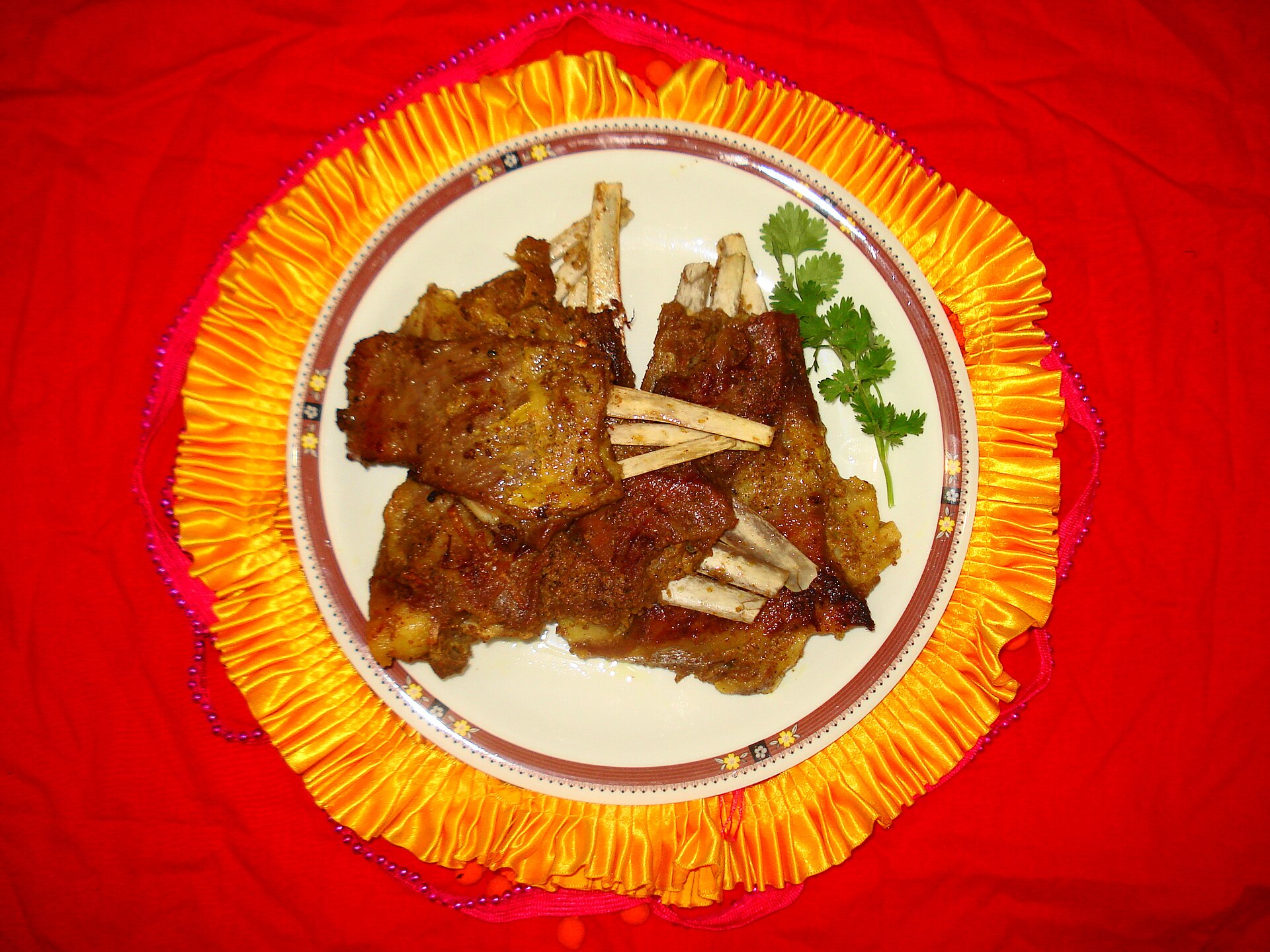

A wazwan is not a menu. It is a sequence, a seating arrangement, a division of labour and a set of obligations, and the food is only the most visible part of it. At a Kashmiri Muslim wedding the meal is the event's structural spine, and getting it wrong carries social consequences that have nothing to do with whether the meat was tender.
The cooking is done by a professional guild. A team of wazas works under a vasta waza, the head chef, who takes responsibility for the whole banquet and whose reputation travels by word of mouth across the valley. The team arrives at the house or venue the day before, sets up open fires in the courtyard, breaks down the animals, and works through the night. Almost everything is made on site. The traditional account of the guild's origin holds that its founders came to Kashmir from Central Asia in the wake of Timur's campaigns in the late fourteenth century, or during the fifteenth century reign of the sultan Zain ul Abidin. That story is deeply held but rests on tradition rather than on documents, and it should be repeated as tradition.
The trami, and how the meal moves
Guests wash their hands first. A basin and ewer, the tash t naer, is carried among the seated rows and passed from person to person, and this is a formal opening rather than a hygiene measure. Diners then sit in fours around a single large copper platter, the trami, which is brought in covered and heaped with rice. Each person eats from the quadrant nearest them, with the right hand, and courses are added to the platter in turn by servers moving continuously through the hall. The eldest or most senior of the four is expected to begin. Waste is frowned upon, and at the end of the meal leftovers are commonly parcelled and taken home.
The number of courses is often given as thirty six. In practice it varies with budget, region and family, and the figure functions as a benchmark rather than a rule. The opening items are usually laid on the rice before the platter arrives: tabak maaz, squares of rib slow simmered in milk and spices then fried until the edges crisp, is one of the most recognisable. Methi maaz, offal cooked with fenugreek, and seekh kebabs often join it. Then come the wet dishes in sequence, including rogan josh, daniwal korma heavy with coriander, marchhwangan korma built on Kashmiri chilli, aab gosht finished with milk, and vegetable preparations such as ruwangan chaman, paneer in tomato, and dum aloo. Gushtaba traditionally closes the savoury sequence, and to serve anything substantial after it is to tell your guests the meal is not over when it is.
Two dishes, one technique
The pair of meatball dishes explains the craft. Rista arrives in a red gravy coloured with Kashmiri chilli, gushtaba in a pale gravy bound with beaten yoghurt. Both begin the same way, and the method is the point. Boneless meat is pounded on a smooth stone with a heavy wooden mallet until the muscle fibre breaks down and the fat is worked evenly through it. This is not mincing. Pounding develops an elastic, springy protein structure that a grinder cannot produce, which is why a properly made gushtaba has a bouncy texture and why the balls hold together through a long simmer without any binder. The rhythmic sound of the mallets is one of the characteristic noises of a Kashmiri wedding courtyard.
The seasoning palette is narrow and deliberate. Kashmiri red chilli contributes colour more than heat. Ratanjot, the root of a plant in the borage family, is steeped in oil to deepen the red of rogan josh. Fennel and dry ginger powder do much of the work that onion and garlic do elsewhere. Dried cockscomb flower gives colour to some preparations. Black cardamom, cinnamon and cloves appear, but the cuisine is not built on browning and layering the way north Indian cooking generally is, and there is comparatively little tomato.
Two kitchens, not one
It is a common mistake to treat Kashmiri food as a single tradition. Kashmiri Pandit cooking and Kashmiri Muslim cooking share dish names and diverge on fundamentals. Pandit kitchens traditionally avoid onion and garlic and lean on asafoetida, dry ginger and fennel; Muslim kitchens use onion, garlic and the local shallot called praan, and do not use asafoetida. Rogan josh exists in both, and the two versions are genuinely different dishes wearing the same name. Yoghurt based yakhni likewise. Anyone who tells you there is one authentic recipe is describing one community's kitchen and calling it the valley's.
The wazwan is also under economic strain. The scale of a traditional wedding banquet, with hundreds of guests and a full team of wazas working for days, is expensive enough that authorities in Jammu and Kashmir have periodically attempted to curb wedding expenditure and guest numbers, and families themselves debate whether the obligation has become ruinous. At the same time the tradition has travelled: wazas cater wazwan for Kashmiri communities in Delhi, in the Gulf and further afield, and restaurants offer abbreviated versions on a plate for one. Something survives in that, and something obviously does not, because a meal designed around four people sharing a copper platter is not really transferable to a table setting.
References
- WikipediaWazwan
- WikipediaKashmiri cuisine
- WikipediaRogan josh
- WikipediaKashmir
This is a reference article, written from the sources above. It is background, not news reporting.