The Dosa: South India's Everyday Masterpiece
Reference library · 1055 words
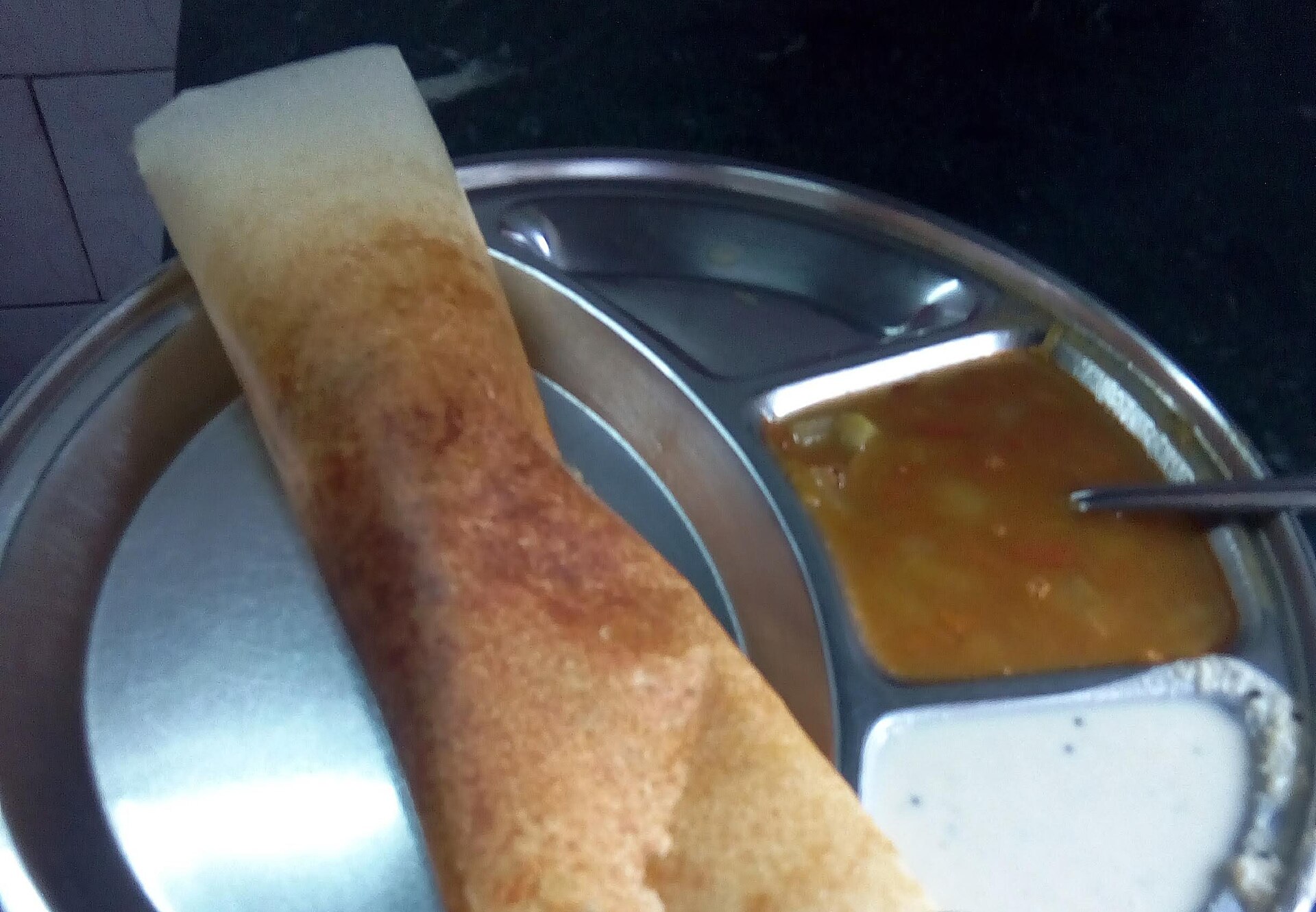

A dosa is a fermented batter of rice and lentils poured thin onto a hot griddle and cooked into a crisp, lacy disc. Described that way it sounds trivial. It is in fact one of the more sophisticated everyday foods in the world, resting on a piece of biological engineering that predates any understanding of microbiology, and it solves several nutritional and practical problems at once.
The batter is made from raw rice and urad dal, husked black gram, usually with a small quantity of fenugreek seed. The two are soaked separately, ground separately, then combined and left to ferment for somewhere between eight and sixteen hours depending on the ambient temperature. Fermentation is quick in Chennai in May and painfully slow in Melbourne in July, which is why diaspora cooks resort to warm ovens and yogurt makers. During that rest, wild lactic acid bacteria and yeasts present on the grain and in the environment multiply, producing carbon dioxide that aerates the batter, lactic acid that lowers the pH and gives the sour note, and enzymes that begin breaking down starches and proteins.
The consequences are practical. Fermentation improves the availability of certain nutrients, notably by reducing phytic acid, which otherwise binds minerals such as iron and zinc and limits their absorption. It increases some B vitamin content. It makes the batter easier to digest. And combining a cereal with a legume supplies a more complete amino acid profile than either alone, which matters enormously in a region with a large vegetarian population. None of this was designed by anyone. It emerged from repeated household practice and was retained because it worked.
Where it came from, and why the answer is uncertain
Origins here are contested, and it is worth being honest about the state of the evidence. References to a food called dosai or similar appear in Tamil literature of considerable antiquity, and the food historian K. T. Achaya argued for early Tamil country origins. Others have pointed to Karnataka, and specifically to Udupi, where the temple kitchens and the restaurant tradition that grew out of them did an enormous amount to standardise and spread the dish. There are also arguments that the earliest versions were thicker and softer, closer to what would now be called set dosa or the Kerala appam family, and that the paper thin crisp dosa is a later refinement. What is not in doubt is that the fermented rice and lentil batter family, which also produces idli, is old, widely distributed across the southern peninsula and Sri Lanka, and claimed with feeling by more than one region.
The Udupi Brahmin cooks deserve particular credit for the dosa's national career. From the early twentieth century, Udupi restaurants spread through Bombay and then across India, offering cheap, quick, reliably vegetarian food that suited urban office workers and travellers. The standardised format of the modern south Indian restaurant, dosa and idli and vada, coconut chutney, a bowl of sambar, filter coffee served in a tumbler and davara, is substantially their invention as a commercial system, even where the individual dishes are older.
The family, and why the varieties are not arbitrary
Masala dosa is the version most non Indians meet first: a crisp dosa folded around a filling of potato cooked with onion, turmeric, mustard seed and curry leaf. The turmeric is what makes the potato yellow. The Mysore variant adds a layer of hot red chutney, usually built on red chilli and garlic, smeared on the inside before filling, and is a genuinely different eating experience.
Rava dosa abandons fermentation entirely. Made from semolina, rice flour and buttermilk with the batter kept very thin and ladled rather than spread, it produces an irregular, holed, exceptionally crisp result. Because it is unfermented it can be made on demand, which is why restaurants like it. Neer dosa, from coastal Karnataka, uses only ground raw rice and water, is also unfermented, and produces a soft white lacy crepe rather than a crisp one. Pesarattu, from Andhra Pradesh and Telangana, is made from whole green gram (moong) rather than rice and urad, often served with ginger chutney and sometimes with a layer of upma inside. Adai is thicker and mixes several lentils, closer to a savoury pancake than a crepe. Set dosa is small, thick and soft, served in stacks.
Technique matters as much as batter. The griddle, traditionally a heavy cast iron tawa, must be properly hot and properly seasoned. A common professional trick is to wipe the hot surface with a halved onion dipped in oil, which both cleans and lubricates it. The batter is poured at the centre and spread outward in a widening spiral with the base of the ladle in a single continuous motion; hesitate and the batter sets before the spiral is complete. Oil or ghee is drizzled around the rim. The dosa is not turned in most preparations: the top steams while the base crisps, and it is folded and lifted when the edges lift away from the metal on their own.
Accompaniments, and a note on sambar
A dosa is rarely eaten alone. Sambar, a lentil and vegetable stew soured with tamarind and seasoned with a roasted spice blend, is the standard partner, though it is worth noting that sambar itself varies sharply by region, with Tamil versions generally more tamarind forward and Udupi versions sweeter and using jaggery. Coconut chutney, ground fresh coconut with green chilli, ginger and roasted gram, tempered with mustard seed and curry leaf, is nearly universal. Tomato chutney, coriander chutney and a dry chutney powder called podi, mixed with sesame oil and eaten with the dosa, extend the range.
The dosa's spread beyond India, and its recent transformations into cheese dosas, pizza dosas and other things that would horrify a Udupi cook of 1930, tend to provoke arguments about authenticity. Those arguments are usually less interesting than the food itself. The dosa has always been a moving target: the crisp restaurant version was itself a modernisation, the potato filling depends on a New World crop that reached India only through European contact, and the dish's history is one of continuous adaptation. What has stayed constant for a very long time is the soaked grain, the ground lentil, the overnight wait and the hot iron.
References
- Encyclopaedia BritannicaDosa
- National Center for Biotechnology InformationFermented foods research literature (PubMed)
- BBCBBC Food: Dosa
- Encyclopaedia BritannicaKarnataka
This is a reference article, written from the sources above. It is background, not news reporting.