Diwali Across India: One Festival, Many Traditions
Reference library · 1035 words
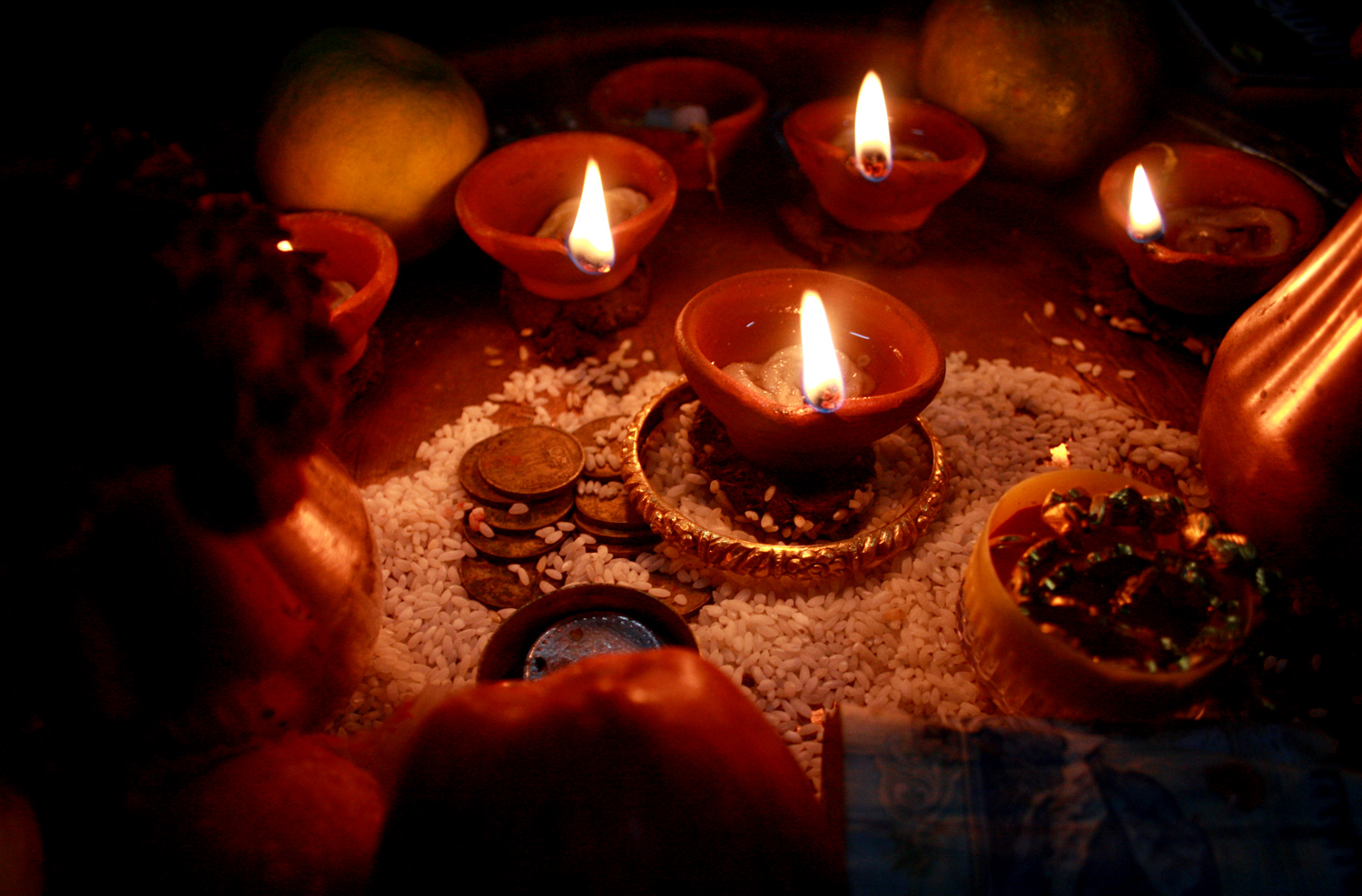

Diwali, or Deepavali, is usually introduced to outsiders as the Indian festival of lights, which is accurate and almost useless. It is better understood as several distinct festivals that happen to fall in the same few days of the lunar calendar and share the symbol of the lamp. What is being commemorated, who is being worshipped and even which day counts as the main one all change substantially from region to region, and the differences are not trivial variations on a theme.
The timing is fixed by the Hindu lunisolar calendar rather than the Gregorian one, which is why the date moves each year. Diwali falls on the new moon night (amavasya) of the month of Kartika, which places it in October or November. The darkest night of the lunar month is the point: the lamps mean most when there is no moon. The festival runs across several days, commonly counted as five, beginning with Dhanteras and ending with Bhai Dooj, though the count and the names differ regionally.
Which story, and where
In much of northern India, Diwali commemorates the return of Rama to Ayodhya after fourteen years of exile and the defeat of Ravana, as told in the Ramayana. The lamps represent the city lighting his way home. This is the version most often given as the explanation of Diwali generally, and it dominates in Uttar Pradesh, Bihar and the Hindi speaking north.
In much of southern India, the central story is different: the festival marks the killing of the demon Narakasura by Krishna, and the main observance is Naraka Chaturdashi on the day before the new moon, with an early morning ritual oil bath. Ask someone from Tamil Nadu or Andhra Pradesh what Diwali celebrates and you are likely to get Narakasura rather than Rama.
In western India, and particularly among trading communities in Gujarat and Maharashtra, the dominant emphasis is on Lakshmi, goddess of wealth and good fortune, and on the closing of the business year. Account books are ritually blessed in the chopda pujan ceremony, old ledgers are closed and new ones opened, and the day after Diwali is the Gujarati new year. This is a commercial calendar as much as a religious one, which is why Dhanteras, two days before, is associated with buying metal, particularly gold and silver, and why Indian jewellers do an enormous proportion of their annual trade in that week.
In Bengal and parts of eastern India the same new moon night is Kali Puja, devoted to the goddess Kali, with a very different mood: fierce rather than domestic, with night worship and offerings that have no counterpart in the Lakshmi centred west. In Odisha, families perform rituals to guide ancestors with burning jute stems. In the far east and northeast, observance varies widely again.
Diwali is also not exclusively Hindu. Jains observe it as the anniversary of Mahavira attaining moksha, liberation, and the occasion has a solemn and ascetic character quite unlike the fireworks version. Sikhs observe Bandi Chhor Divas on the same days, commemorating the release of Guru Hargobind from imprisonment at Gwalior Fort and, by tradition, his insistence on the release of imprisoned princes alongside him; the Golden Temple at Amritsar is illuminated. Some Newar Buddhists in Nepal observe related rites. A single family of dates carries several unrelated religious meanings.
The five days, and what actually happens
Dhanteras opens the sequence, associated with Dhanvantari, a physician figure of Hindu tradition, and in practice with purchasing. Naraka Chaturdashi, or Choti Diwali, follows. The new moon night is Lakshmi Puja and the main Diwali night in most of the north and west. The following day is Govardhan Puja or Annakut in many regions, recalling Krishna lifting Mount Govardhan, and in Gujarat the new year. The last day is Bhai Dooj, on which sisters mark their brothers' foreheads and the two exchange gifts, a sibling observance parallel to Raksha Bandhan earlier in the year.
Domestic preparation begins well before. Houses are cleaned thoroughly, which has an obvious practical dimension after the monsoon. Doorways are decorated with rangoli, patterns made on the floor from coloured powder, rice flour, flower petals or sand, known as kolam in Tamil Nadu, muggu in Andhra, alpana in Bengal and mandana in Rajasthan. The regional names attach to genuinely different design vocabularies: Tamil kolam is typically geometric and built around a grid of dots, while Bengali alpana is more freely drawn and floral. Small oil lamps, diya, made of unglazed clay and burning cotton wicks in oil or ghee, are placed along walls, thresholds and windows.
Food is regional in the same way everything else is. North Indian households make barfi, ladoo and kaju katli; Maharashtrian families make the fried and stuffed items collectively called faral, including chakli, chivda, karanji and shankarpali; Tamil households make murukku and various legiyam, a medicinal digestive paste taken after the rich food. Gift exchange, particularly of sweets and dried fruit, is close to obligatory in business and social networks.
Fireworks, air quality and a live argument
Fireworks are the part of Diwali that generates genuine public controversy in India, and it would be dishonest to describe the festival without it. The combination of firework smoke, seasonal crop residue burning in neighbouring states and cool, still autumn air produces severe air pollution episodes in Delhi and other northern cities around the festival. Indian courts have at various times restricted the sale and use of conventional firecrackers, permitted only lower emission alternatives, and limited the hours in which they may be set off, and enforcement has been inconsistent.
The debate inside India is not simply environmentalists against tradition. Defenders point out that large scale fireworks are a relatively recent addition to Diwali, that the older observance centred on oil lamps, and that the firework industry, concentrated around Sivakasi in Tamil Nadu, employs a great many people whose livelihoods are directly affected by bans, with child labour concerns of its own. Critics point to hospital admissions for respiratory distress and to injuries. Many households have moved toward lamps, lights and sweets without crackers, entirely voluntarily. The festival has changed shape before and is changing again.
References
- Encyclopaedia BritannicaDiwali
- The British MuseumSouth Asia collection and religion resources
- BBCBBC Religions: Hinduism, Diwali
- Victoria and Albert MuseumSouth Asia collections
This is a reference article, written from the sources above. It is background, not news reporting.