Chettinad Cooking and Its Fearless Approach to Spice
Reference library · 916 words

Chettinad has a reputation problem, and the problem is that its reputation has shrunk to a single adjective. Ask most people outside Tamil Nadu what Chettinad food is and the answer will be hot. Ask them to name a dish and it will be Chicken Chettinad, a plate that appears on Indian restaurant menus from Chennai to Croydon in versions that would puzzle a cook in Karaikudi. The heat is real enough. What gets lost is the reason for it, and the reason has less to do with bravado than with trade, climate and a very specific mercantile history.
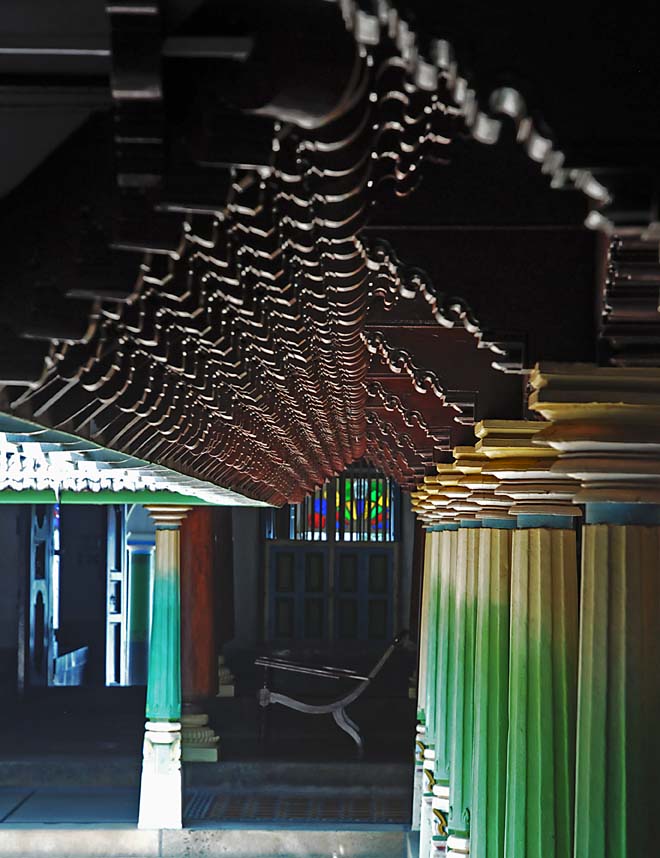
The cuisine belongs to the Nagarathars, also called the Nattukottai Chettiars, a Tamil merchant and banking community concentrated in a cluster of villages across Sivaganga and Pudukkottai districts. Karaikudi is the principal town, with Devakottai and Kanadukathan among the better known settlements. The name Nattukottai points to their houses, the country forts, while Nagarathar means town dweller. The community began in salt and moved into inland and coastal trade in cotton and rice, then into banking. From the late eighteenth century onward their firms financed rice, teak and rubber across Ceylon, Burma, Malaya, Singapore, Indonesia and Vietnam, and the money came home as mansions built with Burmese teak, Italian marble, European glass and locally made Athangudi tiles.
Inside the Spice Box
A Chettinad kitchen is defined less by any one ingredient than by how many are in play at once. The standing cast includes dried red chilli, black pepper, fennel, coriander seed, cumin, fenugreek, star anise, cinnamon, cloves, bay leaf, dried flower buds known as marathi mokku, curry leaf, tamarind and coconut. The signature, though, is kalpasi, the lichen Parmotrema perlatum, sold as black stone flower or dagad phool. Raw, it smells of almost nothing. Dropped into hot oil or ghee at the start of cooking it releases a dark, smoky, faintly medicinal aroma that is the single most identifiable note in a good Chettinad gravy, and the element home cooks most often say separates a competent dish from a great one.
The technique matters as much as the list. Rather than reaching for one all purpose masala, a Chettinad cook dry roasts a specific combination of whole spices for the dish in hand, often with coconut, and grinds it fresh. That is why two Chettinad gravies from the same kitchen can taste unrelated. It also explains the depth: roasting develops the aromatic compounds before any liquid enters, so the finished gravy tastes cooked through rather than merely spiced.
The heat itself comes from two directions. Black pepper carries a slower, warmer burn and has been in Tamil cooking for as long as there is any record of it, since the coast was a pepper exporting region in antiquity. Chilli is a much later arrival, reaching India through Portuguese trade in the sixteenth century and spreading fast. Dishes such as milagu varuval, pepper fry, sit closer to the older tradition, while the chilli forward gravies are the newer layer. Calling the cuisine fearless is fair, but the fearlessness is about stacking aromatics, not about raw capsaicin.
The Dishes, and the Dry Country Behind Them
The repertoire runs wider than the restaurant version suggests. There is kari kuzhambu with mutton, meen kuzhambu with fish and tamarind, crab and prawn masalas from the nearby coast, kozhi milagu varuval, and a substantial vegetarian side that includes kootu, poriyal, kara kuzhambu and vatha kuzhambu. Breakfast and tiffin bring idiyappam, appam, paniyaram and kozhukattai. Sun dried vegetables and salted preparations known as vathal and vadagam are everywhere, fried at the last moment to add crunch and concentrated flavour.
That preserving habit is not decorative. Chettinad is a dry, rain scarce tract with poor surface water, so the pantry evolved around sun drying, salting and pickling. The merchant pattern reinforced it. Men were frequently abroad for long stretches while households ran on stores, which favoured food that kept and could be reconstituted. It is a cuisine shaped by absence as much as by wealth.
What Is Actually Contested
Two claims deserve caution. The first is that Chettinad food is essentially Southeast Asian in origin, brought back wholesale from Burma. Some imports are undeniable and traceable, kavuni arisi, the dark Burmese rice used for a sweet pudding, being the clearest. But Chettinad's grammar, tamarind gravies, coconut and lentil dishes, tempered curry leaf and mustard seed, is squarely Tamil, and treating the whole cuisine as a colonial era import overstates the case badly.
The second is Chicken Chettinad itself. The dish as commonly served is largely a hotel and restaurant construction of the twentieth century, standardised for menus and marketed as the face of a much larger tradition. Nagarathar households cook meat, and cook it well, but a great deal of everyday home food is vegetarian and follows festival and ritual calendars. Commercial Chettinad masala compounds the distortion by selling one fixed blend where the tradition is built on grinding a different one each time. Neither point makes the restaurant dish illegitimate. It simply is not the whole cuisine, and there is no settled authority that can declare a single correct recipe.
Visitors can still eat their way into the argument. The mansion villages around Kanadukathan and Karaikudi have opened heritage houses and small kitchens where the cooking is closer to home practice, and where the spice grinding happens in front of you. It is worth arriving hungry and asking what has been ground that morning. The answer changes daily, which is the point.
References
- WikipediaChettinad cuisine
- WikipediaNagarathar
- WikipediaChettinad
- WikipediaParmotrema perlatum
This is a reference article, written from the sources above. It is background, not news reporting.