The Bauls of Bengal: Wandering Singers of the Soul
Reference library · 989 words

Along the flat river country of Bengal, split since 1947 between the Indian state of West Bengal and what is now Bangladesh, there is a class of singer who owns almost nothing and carries a one stringed instrument. The Bauls are wandering musician mystics whose songs are simultaneously folk entertainment, spiritual instruction and a coded argument against organised religion. They are among the most recognisable figures in Bengali culture, and among the least understood, partly because their tradition is deliberately oblique. UNESCO added Baul songs to its representative list of the intangible cultural heritage of humanity, an unusual honour for a tradition with no scripture, no central authority and no fixed membership roll.
Even the name is contested. The most commonly repeated derivation traces baul to the Sanskrit vatula, meaning mad or wind struck, which fits a group that treats social respectability as an obstacle. Others prefer vyakula, restless or agitated, and some scholars have argued for an Arabic or Persian root connected to the Sufi vocabulary that saturates Baul practice. No derivation is settled, and Bauls themselves rarely care, since the songs treat madness as a compliment.
A religion of the body, not the book
Baul practice draws on at least three older currents that met in the Bengal delta. From Vaishnava Sahajiya devotion it takes the idea that the divine is reached through the natural, embodied self rather than through renunciation. From the Nath yogis and tantric Buddhist Sahajayana it takes an elaborate physiology of breath, seed and inner channels. From Sufism, carried into Bengal by generations of Muslim teachers, it takes the figure of the fakir, the master and disciple bond, and a suspicion of clerical authority. The result is a lineage that includes both Hindu Bauls, often loosely Vaishnava, and Muslim Fakirs, who sing much of the same repertoire. In practice the two categories blur to the point of uselessness, which is precisely the point the songs are making.
The central Baul doctrine is deha tattva, the truth of the body. The divine is not in a temple or mosque but inside the practitioner, described in song as the moner manush, the man of the heart, or as an unknown bird that flies in and out of a cage of bone. Because the associated practices include esoteric breath and sexual disciplines transmitted only from guru to disciple, and because those practices are genuinely at odds with mainstream religious norms of both communities, Bauls have attracted suspicion and occasional violence. Songs are taught in what Bengali critics call twilight language, where a river crossing, a broken boat or a jeweller weighing gold all carry a second meaning available only to the initiated.
The instruments and the sound
Baul music is defined by its portability. The ektara, a single string stretched over a gourd between two flexible bamboo splints, is squeezed with the hand to bend the pitch, producing the sliding drone that anchors almost every performance. The dotara, a fretless plucked lute usually with four strings despite a name that means two strings, supplies melody. The khamak, sometimes called the anandalahari, is a drum with a gut string passing through the skin, plucked while the string is pulled taut, giving the wet croaking punctuation that outsiders often notice first. A small duggi drum tied at the waist, brass kartal clappers and ankle bells complete the kit. Bauls sing standing and dancing, which is why nothing they play requires sitting down.
Songs are usually short, strophic and built on modes close to Bengali folk rather than to classical raga, though many Bauls have absorbed classical ornament. Nearly every song ends with a bhanita, a signature line naming the composer, which is how a largely oral repertoire has kept its attributions for two centuries.
Lalon, Tagore and the wider world
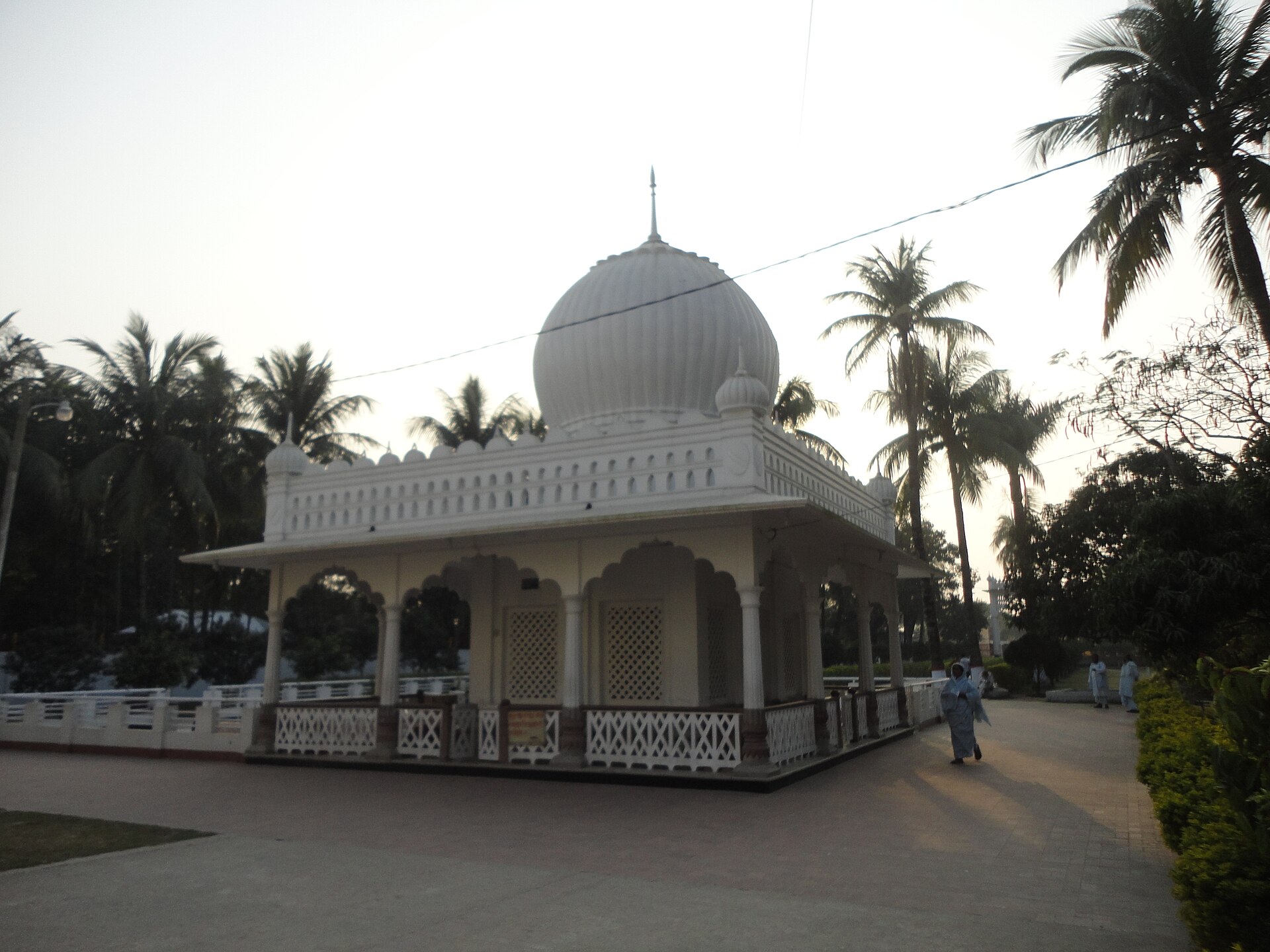
The towering composer of the tradition is Lalon, known variously as Lalon Fakir, Lalon Shah or Lalan Sain, who lived at Cheuriya near Kushtia in what is now Bangladesh and died there in 1890. Hundreds of songs are attributed to him. Their subject is repeatedly the absurdity of religious labels: one famous lyric asks what caste or creed anyone can claim to see, since nobody has ever seen the mark on a person at birth. Lalon left no written text of his own; his songs were preserved by disciples at his akhra, or hermitage, which remains a pilgrimage site. Disputes about whether Lalon was born Hindu or Muslim continue, and the honest answer is that the evidence does not settle it, which is a fitting outcome for a man who spent his life refusing the question.
Rabindranath Tagore lived at Shilaidaha managing family estates in the same region and encountered Baul singers directly. He collected and published Lalon songs, absorbed the Baul melodic idiom into his own Rabindrasangit, and devoted an appendix of his Hibbert Lectures, published as The Religion of Man, to the Baul singers of Bengal. That endorsement moved the Bauls from village margin to national symbol, a promotion that Baul practitioners have benefited from and also been flattened by.
The tradition reached Western listeners in the 1960s, when Purna Das Baul toured abroad and appeared, with Luxman Das Baul, on the cover of Bob Dylan's album John Wesley Harding. Later musicians including Paban Das Baul and Parvathy Baul have recorded and performed internationally. The living calendar still matters more than the discography. Bauls gather in enormous numbers at the fair at Jaydev Kenduli in Birbhum district around Makar Sankranti in mid January, at the Poush Mela at Santiniketan in late December, and at the annual observances at Lalon's shrine in Kushtia, held around the spring full moon of Dol Purnima and again on his death anniversary. At those gatherings the paradox of the tradition is on plain view: singers who preach detachment from the world, performing to crowds that arrive by the trainload.
References
- UNESCOBaul songs, Intangible Cultural Heritage of Humanity
- Encyclopaedia BritannicaBaul
- The Nobel PrizeRabindranath Tagore, Biographical
- Sangeet Natak AkademiIndia's national academy for music, dance and drama
This is a reference article, written from the sources above. It is background, not news reporting.